
The number that should reset how people think about business intelligence jobs is this: the global BI market is projected to reach $54.27 billion by 2030, and that expansion is tied to a 20% growth in the BI analyst job market in the United States, or an estimated 284,100 new positions over the next decade, according to Refonte Learning’s BI career outlook.
That demand exists because BI professionals do more than build reports. They translate operational noise into decisions. A strong BI hire helps a sales leader trust a forecast, gives a finance team one clean version of revenue, and stops executives from arguing over whose spreadsheet is right.
For candidates, that creates a practical opportunity. For employers, it creates a hiring problem. Good people are available, but the market punishes vague job scopes, bloated interview loops, and teams that still think BI is only dashboard production. The strongest business intelligence jobs now sit at the intersection of data, business process, and communication.
Table of Contents
- The Rise of the Data Translator
- Decoding Common Business Intelligence Job Titles
- The BI Professional’s Toolkit Skills and Certifications
- BI Salary and Job Market Trends for 2026
- Your Roadmap to Landing a Business Intelligence Job
- How to Hire and Retain Top BI Talent
- Building Your Future with Business Intelligence
The Rise of the Data Translator
Business intelligence sits between raw data and business action. That’s why the most effective BI professionals aren’t judged only by how many dashboards they ship. They’re judged by whether leaders can understand what changed, why it matters, and what to do next.
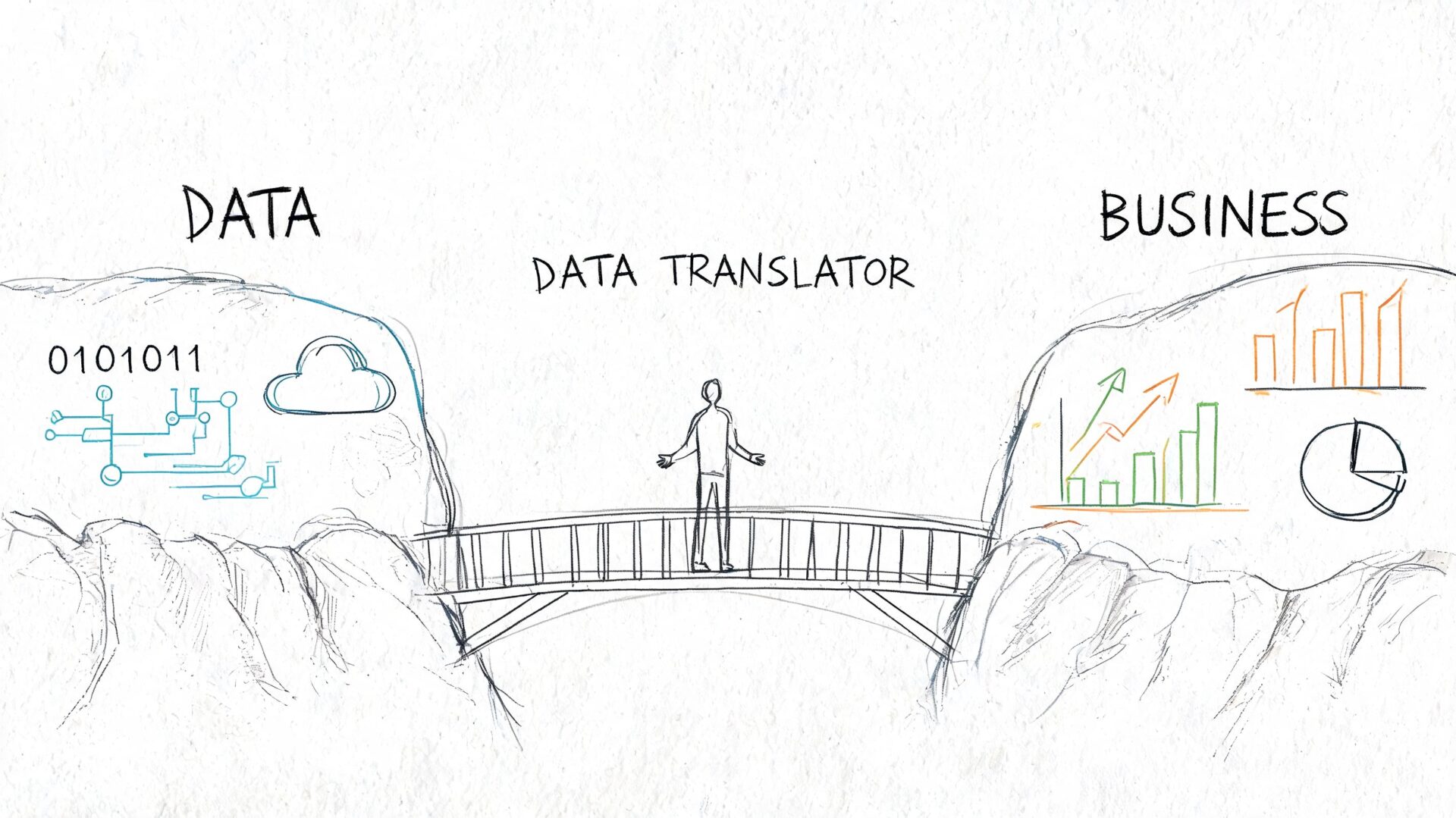
A data warehouse can hold clean tables. Power BI or Tableau can visualize them beautifully. None of that helps if a revenue leader reads one metric, finance reads another, and operations trusts neither. BI earns its seat when someone can take definitions, business rules, and reporting logic and turn them into plain English for decision-makers.
That translator role is why business intelligence jobs have become more strategic. The work touches pricing, forecasting, customer retention, supply chain performance, and executive planning. Candidates who understand the business side tend to advance faster than candidates who only know how to click through a dashboard tool.
Practical rule: If a BI professional can’t explain a KPI clearly to a non-technical stakeholder, the analysis isn’t finished.
Hiring managers often miss this. They ask for a “BI analyst” when they need a hybrid who can model data, define metrics, and influence stakeholders. Candidates miss it too. They focus on tool lists and forget that the market rewards people who can resolve ambiguity.
Three realities define the field right now:
- Demand is broad: Finance, healthcare, technology, and other data-heavy sectors continue investing in BI capability because leaders need faster, cleaner decision support.
- The work is cross-functional: BI teams rarely operate in isolation. They work with product, finance, sales, operations, engineering, and compliance.
- Communication is a hiring filter: Strong SQL gets attention. Clear business framing closes offers.
For anyone evaluating business intelligence jobs, the question isn’t just “Can this person analyze data?” The better question is “Can this person help the company act on it?”
Decoding Common Business Intelligence Job Titles
Titles in BI are messy. Two companies can post the same role under different names, and two jobs with the same title can require very different skills. That creates confusion for candidates and expensive hiring mistakes for employers.
A simple way to think about the ecosystem is a film crew. The BI engineer builds the set and keeps the production environment stable. The BI developer creates the reporting layer people interact with. The BI analyst frames the story and explains what matters. The analytics manager sets direction, resolves trade-offs, and keeps the work tied to business priorities.
Why titles cause hiring mistakes
The most common hiring error is combining multiple jobs into one posting. A company asks for deep SQL, dashboard design, data engineering, stakeholder management, and team leadership, then labels it “Business Intelligence Analyst.” That usually narrows the pool and attracts mismatched applicants.
Candidates should read beyond the title and study the actual work. Employers should write to the mission, not the label.
One practical reference for role scope is this business intelligence developer job description, which shows how companies often separate dashboard delivery and reporting ownership from heavier platform engineering work.
Comparison of Key Business Intelligence Roles
| Role | Primary Mission | Common Tools | Key Collaborators |
|---|---|---|---|
| BI Analyst | Turn business questions into usable analysis and reporting | SQL, Power BI, Tableau, Excel, Looker | Finance, sales, operations, product managers |
| BI Developer | Build and maintain dashboards, data models, and report logic | Power BI, Tableau, Looker, dbt, SQL | Analysts, business stakeholders, data engineers |
| BI Engineer | Create scalable data pipelines, warehouse structures, and semantic models | Snowflake, BigQuery, Databricks, dbt, Airflow, SQL | Data engineering, platform teams, analytics leaders |
| Analytics Manager | Prioritize work, define KPI governance, align reporting to business strategy | BI platforms, planning tools, SQL literacy, documentation systems | Executives, department leaders, analysts, engineering |
The BI analyst role is the entry point many individuals recognize. It usually focuses on reporting, trend analysis, stakeholder intake, and recommendation building. The best analysts don’t just answer requests. They clarify the underlying business question behind the request.
The BI developer role often sits closer to the reporting product itself. This person cares about report usability, model performance, refresh reliability, and adoption. A BI developer usually needs stronger ownership of the reporting layer than a general analyst.
The BI engineer goes deeper into infrastructure and modeling. This role becomes important when reporting breaks because data arrives late, schemas drift, or KPI logic differs across teams. Employers that need scale should treat this role as a core hire, not an afterthought.
Teams usually feel the absence of a BI engineer before they recognize the title. The symptoms are duplicate metrics, slow dashboards, and endless manual fixes.
The analytics manager is not just a senior analyst with more meetings. The manager protects team capacity, pushes back on low-value requests, and decides where governance matters most. Without that leadership layer, BI teams get trapped in ticket intake and reactive reporting.
For job seekers, title inflation shouldn’t distract from fit. A well-scoped BI analyst role with strong exposure to stakeholders can be more valuable than a loosely defined “senior” title. For hiring managers, clear title architecture reduces candidate confusion and improves interview quality because applicants know what success looks like.
The BI Professional’s Toolkit Skills and Certifications
Most failed BI hires don’t fail because of one missing tool. They fail because the person is either too technical to influence the business or too business-facing to work independently with data. Strong candidates build both sides.
The technical foundation
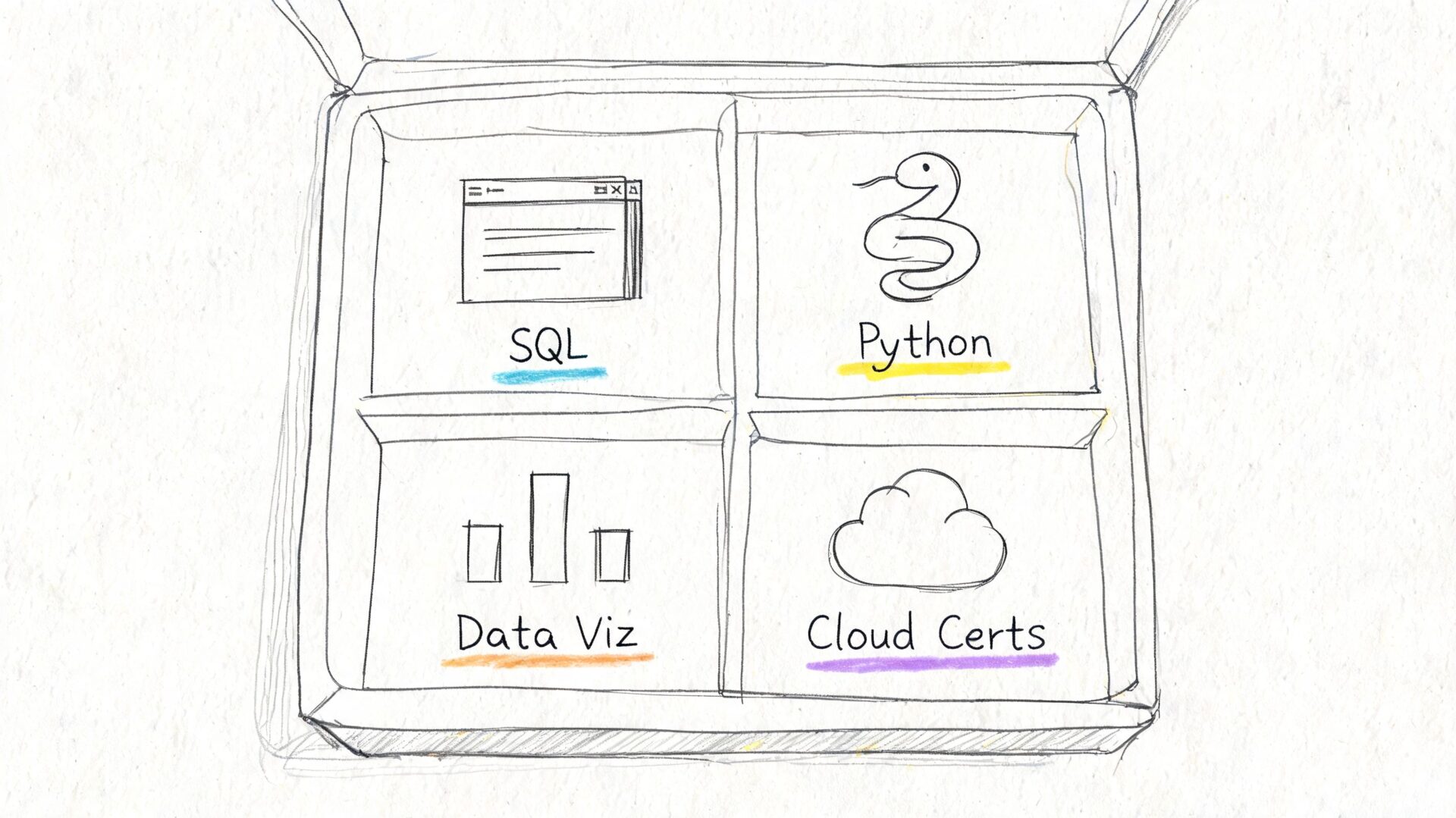
The hard-skill baseline starts with SQL. If a BI professional can’t write, debug, and reason through queries, the rest of the toolkit is fragile. SQL is still the operating language for business intelligence jobs because it connects directly to source systems, warehouses, and metric logic.
After SQL comes the reporting stack. In most hiring environments, that means Power BI, Tableau, Looker, or a combination of them. Candidates don’t need every platform, but they do need one tool they can speak about in detail. Hiring managers should listen for specifics such as data modeling decisions, refresh design, row-level security, stakeholder adoption, and report performance.
Cloud platforms matter more than ever. According to Ziplines on becoming a business intelligence analyst, proficiency in cloud data warehouses like Snowflake and BigQuery is critical, and these environments can reduce ETL latency by up to 80%. The same source notes that candidates with certifications such as the Google BI Professional or Microsoft Power BI Data Analyst Associate see a 25% faster time-to-hire in North American markets.
That doesn’t mean certifications replace proof of skill. They help when paired with portfolio work, clear project explanations, and hands-on familiarity with data modeling concepts like star schemas, semantic layers, and KPI definitions.
A practical learning resource for candidates getting serious about Power BI is Professional Careers Training Power BI, especially for understanding how teams use the platform beyond basic chart building.
The strategic differentiators
Technical competence gets someone into the interview. Judgment gets the offer.
The strongest BI professionals share a few habits:
- They define terms early: They don’t assume “active customer,” “churn,” or “pipeline” means the same thing across teams.
- They challenge bad requests: If a stakeholder asks for a dashboard when the actual need is a one-time analysis, they say so.
- They communicate trade-offs: They can explain why perfect data quality may take longer than the business is willing to wait.
- They write clearly: Good analysis loses value when documentation is vague.
A dashboard is not the deliverable. Shared understanding is the deliverable.
Critical thinking also separates strong candidates from tool collectors. Employers should ask how someone handled conflicting metric definitions or low-trust source data. Candidates should prepare examples that show business judgment, not just technical execution.
For certifications, the best return usually comes from credentials aligned to the tools appearing in target job descriptions. A Power BI-heavy market rewards Microsoft alignment. A candidate leaning into broader analytics fundamentals may benefit from Google BI certification. But no credential compensates for weak communication or shallow project ownership. That’s still where most interviews are won or lost.
BI Salary and Job Market Trends for 2026
Candidates want to know what business intelligence jobs pay. Employers want to know how aggressive they need to be. The honest answer is that title alone doesn’t determine salary. Scope, technical depth, business exposure, and industry context all matter.
What compensation data actually says
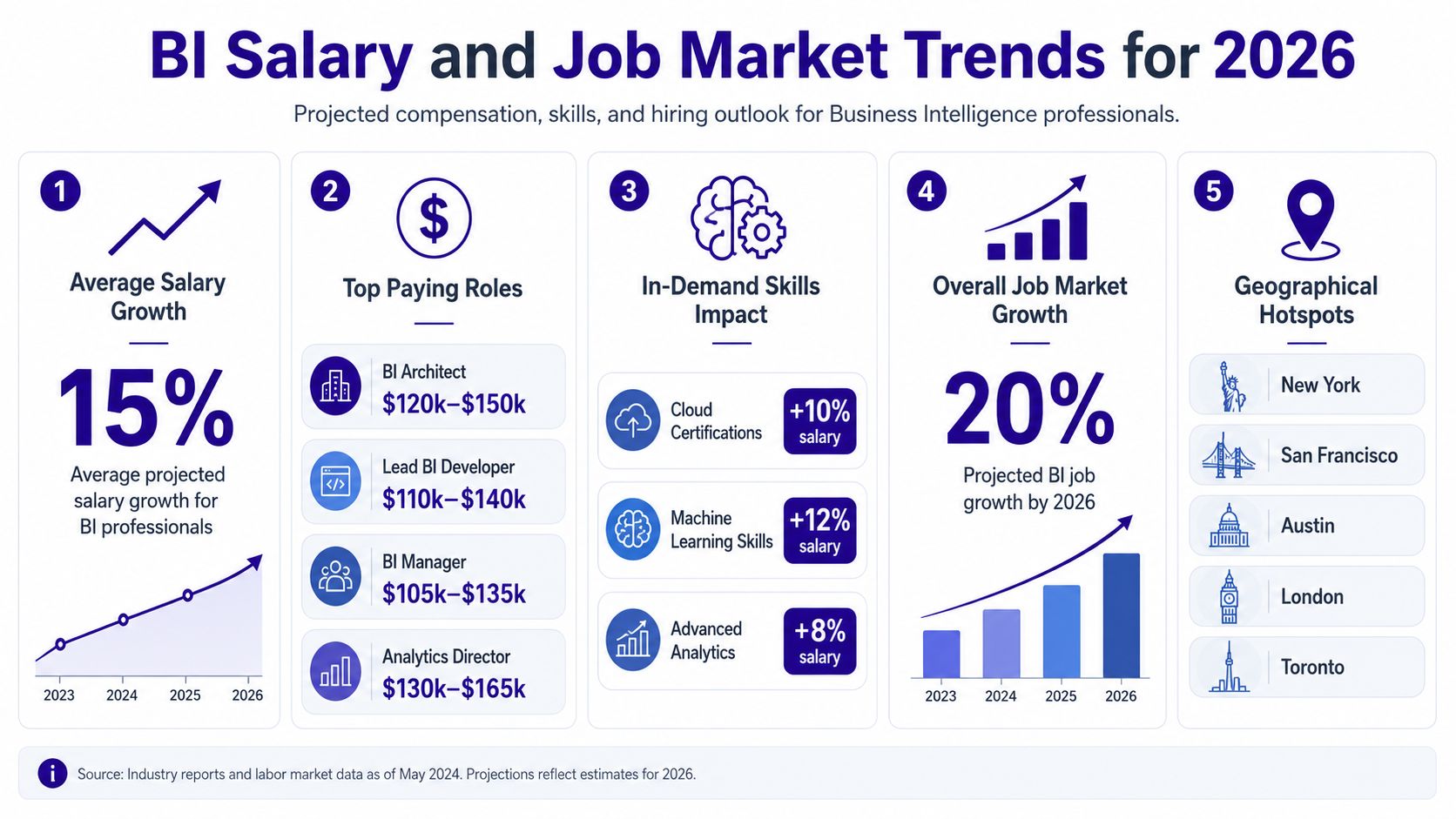
The salary floor for BI has moved up because companies no longer treat these roles as back-office reporting support. Refonte Learning reports that entry-level BI analysts earn $80,000 to $100,000 annually, while experienced consultants exceed $130,000, and the average BI analyst salary in 2024 stood at $75,703, as noted in the earlier market discussion. Those numbers should be read as directional benchmarks, not automatic offers, because hiring range still depends on geography, stack, and role design.
Candidates should also notice where adjacent data roles are heading. According to G2’s business intelligence statistics roundup, the U.S. Bureau of Labor Statistics projects 34% employment growth for data scientists from 2024 to 2034, compared with 3% for all occupations, with about 23,400 annual openings, 245,900 current U.S. jobs, 82,500 projected jobs over the decade, and a median salary of $112,590. The same source notes that software developers are projected to grow 15%, with 153,900 annual openings and a $133,080 median.
Those adjacent benchmarks matter because many BI teams sit close to analytics engineering, machine learning support, and product analytics. A hiring manager competing for strong BI talent often isn’t just competing against other BI postings. They’re competing against broader data roles.
For deeper role-by-role compensation context, many employers use a resource like this data science salary guide to frame range discussions across adjacent functions.
Why AI changes the shape of BI work
AI isn’t removing the need for BI. It’s raising the bar.
The same G2 analysis of BI and AI labor trends reports that PwC’s 2025 Global AI Jobs Barometer found AI-exposed sectors experience wages rising twice as fast as other sectors. It also notes that the World Economic Forum ranks AI/machine learning specialists and big data experts among the top in-demand roles through 2030.
That matters because BI professionals now work alongside copilots, natural language querying, anomaly detection, and automated summarization. The repetitive parts of reporting are becoming easier to automate. The higher-value work is moving toward data definition, governance, business interpretation, and trust.
Employers should pay for decision quality, not just dashboard volume.
For candidates, that means learning how to validate AI output and frame analysis in business terms. For employers, it means job descriptions should reflect the actual future of the role, not an outdated request for static report builders.
Your Roadmap to Landing a Business Intelligence Job
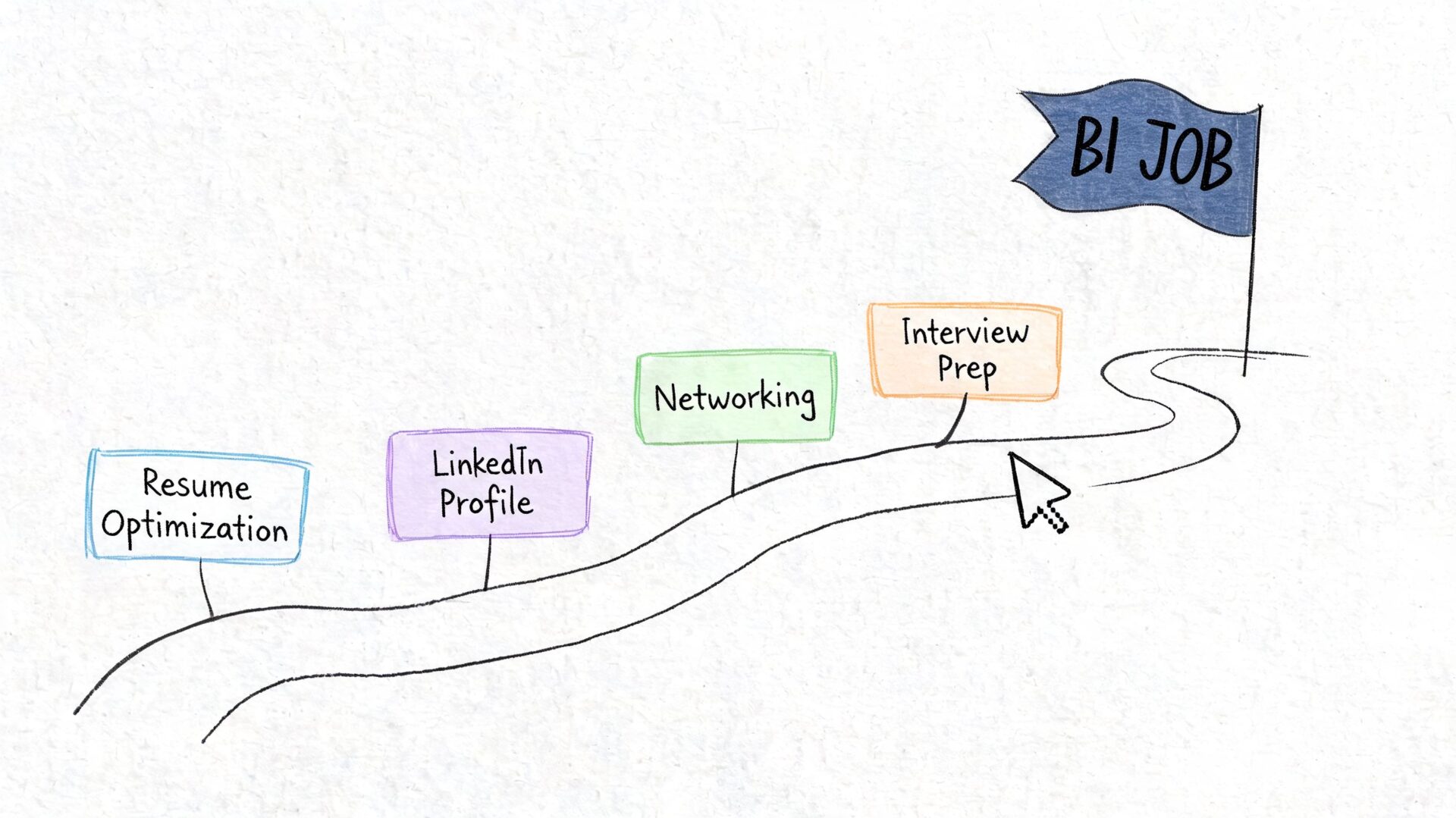
Breaking into BI is more practical than many candidates think, but it isn’t random. Good outcomes usually come from focused positioning, credible project work, and smart networking. That matters even more for career changers.
The market has a documented gap here. According to Indeed-linked research on BI transition opportunities, a significant content gap exists for career changers despite examples such as a QA analyst moving into a remote BI role at Optum Healthcare in 95 days. The same source notes over 12,000 BI analyst openings on Glassdoor, with many open to diverse backgrounds.
Resume and LinkedIn positioning
Most resumes for business intelligence jobs undersell relevant experience. Candidates coming from QA, operations, finance, customer analytics, or research backgrounds often have stronger stories than they realize.
The fix is translation. Instead of listing generic tasks, candidates should rewrite experience around data use, process insight, and stakeholder impact.
A few examples work well:
- From QA to BI: Emphasize defect trend analysis, reporting patterns, root-cause documentation, and process improvement.
- From operations to BI: Highlight KPI tracking, workflow bottlenecks, scheduling data, inventory reporting, or service metrics.
- From finance to BI: Focus on forecasting support, variance analysis, recurring reports, and metric ownership.
Candidates who need a practical benchmark for formatting and content can review CV Anywhere for data analyst resumes, particularly for turning analytical work into clear bullet points.
LinkedIn should match the target role. If someone wants BI interviews, the headline, About section, and featured projects should all support that goal. A profile that mixes five career identities usually gets ignored.
Portfolio projects that get interviews
A portfolio works when it shows business reasoning, not just screenshots.
Good project themes include:
-
Revenue or sales analysis
Use a public dataset to identify seasonality, conversion trends, or underperforming segments. The key is to explain what decision a sales leader could make from the output. -
Operations reporting
Build a dashboard around fulfillment, service delivery, or supply chain timing. Include assumptions, data cleaning choices, and metric definitions. -
Customer retention analysis
Show churn logic, segmentation, or cohort movement. Even a simple project becomes stronger when it explains which teams would use it. -
Executive KPI pack
Create a concise dashboard for leadership. Fewer visuals, cleaner narrative, clearer takeaways.
The strongest portfolio piece answers three questions fast: what problem existed, how the data was shaped, and what action the analysis supports.
Candidates don’t need five large projects. Two or three well-documented ones are usually better than a stack of unfinished notebooks and generic dashboards.
Interview preparation that holds up
BI interviews usually test three things. Can the candidate work with data, can they reason through ambiguity, and can they explain their thinking clearly.
Preparation should cover all three:
- Technical screens: Practice SQL joins, aggregations, window functions, and debugging logic. Be ready to explain why a query was written a certain way.
- Case or take-home work: State assumptions early. Clarify metric definitions. Avoid overbuilding the presentation.
- Behavioral rounds: Use examples that show stakeholder management, prioritization, and how conflicting definitions were resolved.
Candidates preparing for technical and mixed-format interviews can use this guide on preparing for a data science interview because many of the same habits apply to BI screening, especially around structured problem-solving and communication.
The candidates who convert offers usually do one thing well. They make the interviewer feel that this person can sit with a business leader, hear a messy problem, and return with something useful.
How to Hire and Retain Top BI Talent
Companies lose strong BI candidates long before the offer stage. The usual reasons are familiar: vague role definitions, unrealistic skill combinations, and interview panels that don’t agree on what they need.
A disciplined hiring process is a competitive advantage in business intelligence jobs because strong candidates can see immediately whether a company understands the function.
A job description that attracts the right candidates
A good BI job description should define the mission, the data environment, and what success looks like in the first stretch of the role. It shouldn’t read like a warehouse of keywords.
A practical template looks like this:
-
Role mission
Explain whether the hire is expected to support executive reporting, build self-service dashboards, improve data trust, own KPI definitions, or scale the reporting layer. -
Core responsibilities
Focus on actual work such as writing SQL, building in Power BI or Tableau, partnering with finance or operations, documenting metric logic, and improving reporting reliability. -
Required skills
Separate true requirements from preferences. If Snowflake is mandatory, say so. If dbt is useful but trainable, don’t treat it as a gate. -
Success indicators
Describe outcomes such as cleaner metric consistency, stronger stakeholder adoption, or reduced reporting friction. -
Team context
Clarify who this person works with. BI roles differ sharply depending on whether they sit under data engineering, finance, product, or operations.
Companies should also avoid asking one person to own analytics engineering, executive communication, machine learning support, and team management unless the compensation and title reflect that scope.
An interview process that tests real ability
The best BI hiring loops are short, deliberate, and role-specific. They don’t need theatrics. They need signal.
A strong process usually includes:
-
Recruiter or hiring lead screen
Confirm motivations, communication style, and whether the candidate’s actual work matches the resume. -
Technical evaluation
Use practical SQL or reporting tasks tied to the role. For a BI analyst, focus on analysis and metric logic. For a BI engineer, push harder on modeling and data movement. -
Business scenario discussion
Ask how the candidate would handle conflicting stakeholder definitions, incomplete data, or a dashboard nobody trusts. -
Final team conversation
Test collaboration, curiosity, and whether the candidate can communicate with both technical and non-technical partners.
Green flags often show up in how candidates talk about trade-offs. Strong people discuss data quality limits, stakeholder disagreements, and what they did when source systems were messy. Red flags appear when every story is tool-centric and none of it connects to a business decision.
Hiring managers should ask, “What did you decide not to build?” The answer reveals judgment.
Retention starts before the offer is signed
Retention problems usually begin with role mismatch. If a BI hire expects strategic work and lands in endless ticket fulfillment, they’ll start looking elsewhere.
Employers keep good BI talent when they provide three things consistently:
- Clear ownership: Candidates stay longer when they know which metrics, reports, or business domains they own.
- Career pathing: Analysts need to see whether growth leads toward management, engineering depth, or strategic analytics.
- Learning access: BI professionals want exposure to newer tools, cloud platforms, AI-enabled workflows, and better data practices.
Retention also improves when BI work connects visibly to business outcomes. Analysts and developers are more engaged when leaders use their work in planning, forecasting, and operational reviews. If the team is treated as a reporting service desk, attrition follows.
The strongest employers treat BI as a decision function. That changes who they hire, how they evaluate performance, and why people stay.
Building Your Future with Business Intelligence
Business intelligence jobs reward people and companies that can handle complexity without making it confusing. That’s the core of the field. Candidates who can work with data, define metrics clearly, and communicate to business stakeholders have real opportunity in front of them. Employers that scope BI roles correctly and build disciplined hiring processes will keep winning talent that weaker competitors lose.
For job seekers, the path doesn’t require a perfect background. It requires evidence. Strong SQL, one credible BI platform, a few thoughtful projects, and a resume that translates prior work into business value will go further than a long list of disconnected tools. Career changers can compete if they frame transferable experience properly and stop underselling analytical work they’ve already done.
For hiring managers, the market has become less forgiving. Candidates notice inflated job descriptions, confused interview panels, and teams that still don’t know whether they need an analyst, developer, engineer, or manager. The companies that move well usually define the role tightly, test practical skills, and offer a work environment where BI influences decisions instead of only servicing requests.
The larger shift is strategic. BI is no longer just reporting infrastructure. It is part of how organizations create trust in numbers, align teams around shared metrics, and make faster choices with less noise. That puts BI professionals in the middle of some of the most important operating decisions a company makes.
The opportunity works both ways. Candidates can build durable careers by becoming reliable translators between data and action. Employers can build stronger organizations by hiring people who make data usable, not just available.
Whether the need is a candidate looking for the right next move or a hiring manager trying to fill a hard-to-close BI role, nexus IT group helps connect data talent and employers with precision, practical guidance, and real understanding of what high-impact business intelligence jobs require.