A lot of readers land here at the same moment. A tech candidate has accepted an offer for a cyber, cloud, or government IT role, then sees one line in the paperwork that changes everything: employment is contingent on clearance. On the employer side, a hiring manager has a funded position, a project clock already running, and a candidate who looks perfect on paper but can’t start the actual work yet.
That’s where the confusion usually starts. The biggest misunderstanding in the security clearance process is simple: candidates can’t apply on their own. The process starts only when a federal agency or approved contractor sponsors the person, usually after a conditional offer. For many intelligence roles, the U.S. Intelligence Community says the process takes 9 to 12 months on average according to guidance on sponsorship and timing for security clearance. That single fact changes how both candidates and employers should plan.
For candidates, clearance isn’t a side task to finish over a weekend. For employers, it isn’t an administrative formality to bolt onto hiring after the req is approved. It affects start dates, project staffing, interim work assignments, candidate communication, and retention risk before day one.
Table of Contents
- Your Guide to the Security Clearance Process
- Understanding Clearance Levels and Sponsorship
- Preparing Your SF-86 Questionnaire for Success
- The Background Investigation and Adjudication Phase
- Timelines, Reciprocity, and Common Disqualifiers
- Staying Cleared with Continuous Evaluation
- Practical Guidance for Employers and Candidates
Your Guide to the Security Clearance Process
The security clearance process sits at the intersection of hiring, compliance, and risk. That’s why it causes problems when either side treats it too casually. Candidates often assume a clean resume and strong technical interview will carry them through. Employers sometimes assume a signed offer means the hard part is over.
Neither assumption holds up in cleared hiring.
A candidate might be fully qualified for a role in zero trust architecture, cloud migration, or incident response and still face delays because contact history is incomplete, foreign travel needs clarification, or the sponsoring organization has a slow internal handoff. A hiring manager might think they’re filling one opening, but they’re really managing two parallel workflows: the employment process and the vetting process.
Practical rule: In cleared hiring, the right candidate and the clearable candidate are not always the same person on the same timeline.
The security clearance system is large, standardized, and not built around convenience. It’s built around trust determination. The people involved are assessing whether someone should have access to sensitive information, systems, or facilities. That means details that feel minor in normal hiring can become central in clearance review.
Three realities shape outcomes more than is commonly expected:
- Sponsorship comes first: A person can’t open the process independently. An employer with the right authority has to initiate it.
- Documentation drives speed: Missing dates, incomplete addresses, and vague answers create follow-up work.
- Behavior matters more than spin: The process reacts badly to omissions, contradictions, and avoidable surprises.
Candidates usually benefit from seeing clearance as a professional responsibility, not a mystery. Employers usually benefit from treating sponsorship as workforce planning, not paperwork.
That shared view is what keeps offers from stalling, project plans from slipping further than necessary, and candidates from making preventable mistakes early in the process.
Understanding Clearance Levels and Sponsorship
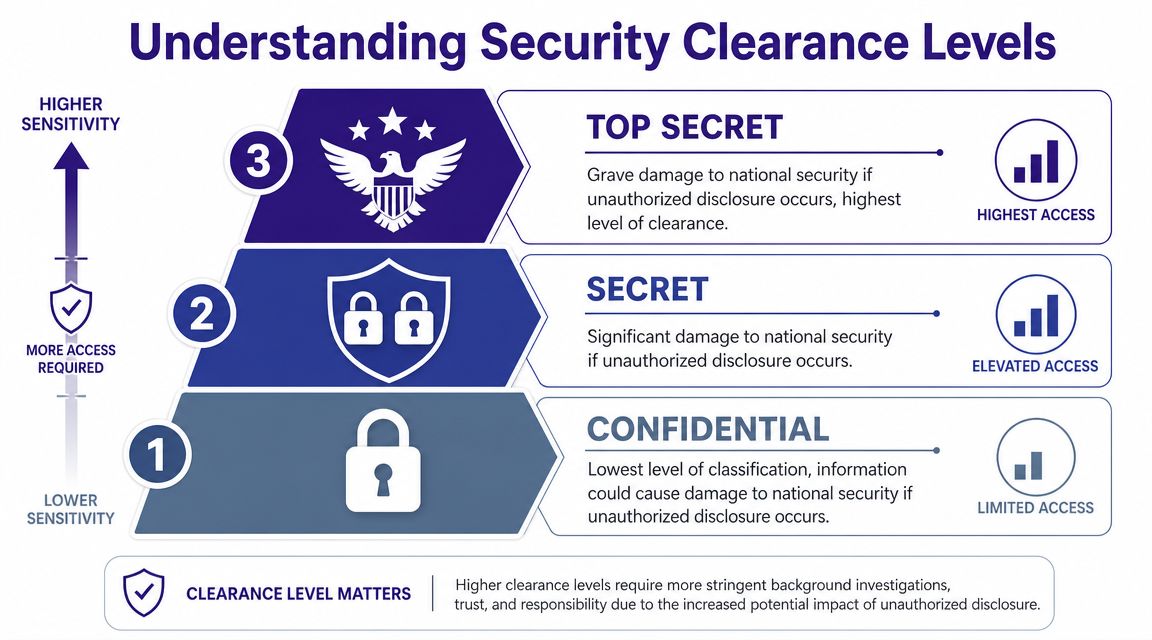
The easiest way to explain clearance levels is to think of them like access badges in a secured facility. Not every worker needs the same doors opened. The higher the sensitivity of the information, the tighter the review before access is granted.
The system is also much larger than many candidates realize. Approximately 5.1 million Americans hold active clearances, and about 1.3 million hold Top Secret or TS/SCI according to this overview of clearance scale and eligibility. That same source notes that applicants must be sponsored by a federal agency or approved contractor, and that U.S. citizenship is a fundamental eligibility requirement for most clearances.
What the levels actually mean
At a practical level, one typically encounters three labels first.
| Level | Access Granted To | Investigation Scope |
|---|---|---|
| Confidential | Classified information at the lowest standard level | Background review tied to the sensitivity of the role |
| Secret | Information where unauthorized disclosure could cause serious national-security harm | Deeper review of personal history, records, and suitability factors |
| Top Secret | Information where unauthorized disclosure could cause grave national-security harm | More extensive investigation, often with added scrutiny and role-specific requirements |
Some roles go further than the base clearance label. A candidate may hear terms such as SCI or program-specific access on top of Top Secret. Those aren’t casual add-ons. They usually mean more controls, more need-to-know restrictions, and stricter onboarding expectations.
Hiring teams that are new to federal work also need to understand the paperwork and vocabulary around classified contracts. A short glossary of essential government contract security terms can help non-security staff interpret what the contract is really requiring before they start recruiting.
Why sponsorship matters so much
Sponsorship is the gatekeeper step. Without it, there is no clearance process to discuss.
For employers, sponsorship means more than sending a form. It means confirming the role requires access, aligning internal security staff, and preparing for a delayed start or phased onboarding. For candidates, it means the right question isn’t “How do I apply for a clearance by myself?” It’s “What kind of employer is willing and able to sponsor me?”
That distinction also affects recruiting conversations. Employers can discuss eligibility requirements, but they still need to handle citizenship and work authorization questions lawfully and consistently. For teams sorting through that issue, this practical guide on whether an employer can ask if someone is a U.S. citizen is useful context.
Sponsorship is where cleared hiring becomes real. Until an authorized employer starts the process, everything else is speculation.
Preparing Your SF-86 Questionnaire for Success
The SF-86 is where many strong candidates either stabilize their case or complicate it. People who treat it like a longer job application usually struggle. People who treat it like the master record for their background usually do better.
The form asks for a detailed account of your history. The broader clearance process can examine criminal history, finances, foreign contacts, travel, education, employment, and interviews with associates and former employers through adjudicative review under 13 guidelines, as described in the earlier linked clearance overview. That means the form isn’t just collecting facts. It’s creating the reference point investigators and adjudicators will compare against other records and interviews.
Treat the SF-86 like a life-history document
A rushed SF-86 creates predictable problems. The biggest ones are date gaps, address gaps, omitted job periods, and incomplete foreign contact disclosures. Candidates often remember the highlights of the last several years. The form requires much more than highlights.
A better approach is to build a timeline before entering anything online. That means listing every residence, every employer, every period of school, major foreign travel, and any issue that might require context. If a date is uncertain, the candidate should resolve it before submission instead of guessing and hoping no one notices.
Accuracy beats elegance. A plain explanation that matches records is far better than a polished answer that leaves out facts.
How to prepare before logging in
Candidates usually do best when they gather supporting details in advance.
- Build a master timeline: Start with residences, employment, education, and travel. Put everything in chronological order so overlaps and gaps are easy to spot.
- Collect contact information: The process may involve interviews with associates and former employers. Don’t wait until the form asks for a verifier.
- Review finances thoroughly: Debt, delinquencies, unpaid obligations, and related issues should be understood before the form is submitted.
- Document foreign ties carefully: Foreign contacts and travel are common areas where vague answers create follow-up questions.
- Reconcile resume and form content: Titles, dates, and employment periods should match what the candidate has already told recruiters and hiring managers.
Employer teams can help here too. A good recruiter or security point of contact won’t fill out the SF-86 for a candidate, but they can explain where applicants usually make mistakes. The same mindset behind disciplined hiring applies here. This article on how to conduct reference checks in 6 easy steps is a good reminder that verification work depends on complete, consistent information from the start.
One more point matters more than candidates like to hear. The form should disclose issues that need explanation. Trying to hide them usually creates the larger problem.
The Background Investigation and Adjudication Phase
After the SF-86 is submitted, the process moves from self-reported history to verification and judgment. This is the stage many candidates describe as a black box. It isn’t random, but it can feel opaque if nobody explains what’s happening.
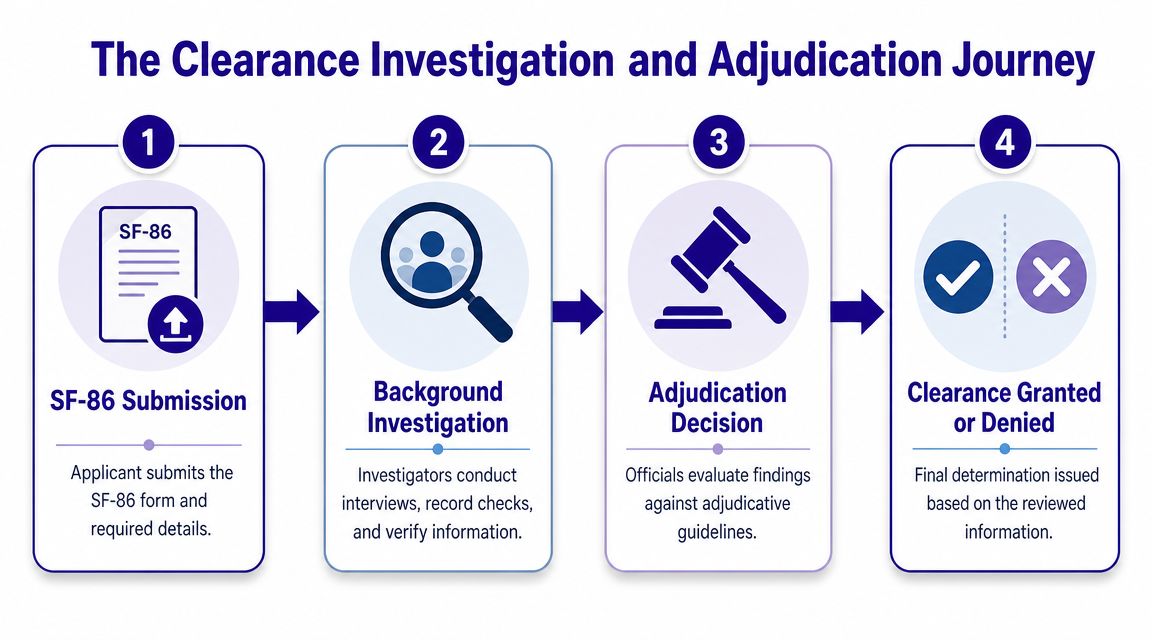
The modern workflow is structured around the electronic questionnaire, records-based background checks, an in-person interview when needed, adjudication, and then continuous vetting according to the DCAA summary of how the security clearance process works.
What happens after submission
Records checks are a major part of the process. Investigators may review criminal, financial, employment, education, and other records relevant to the case. Depending on the role and the issues identified, the case may also involve an in-person interview with the candidate.
That interview isn’t a trap, but it is serious. Candidates should expect questions about inconsistencies, omissions, judgment, and context. Investigators may also speak with people who knew the applicant in work, school, or personal settings. Former employers and associates can become part of the factual picture.
For employers, this phase often exposes whether the pre-hire conversation was disciplined. If the candidate told recruiting one version of a work history and the SF-86 tells another, the credibility issue lands quickly.
How adjudicators evaluate risk
Adjudication is the decision phase. Officials don’t just collect facts and count red flags. They review the case under 13 adjudicative guidelines, weighing issues such as financial responsibility, personal conduct, and foreign influence as part of a broader trust determination.
That’s why context matters. A resolved issue with clear documentation can be very different from an unresolved issue plus inconsistent disclosure. The process is built to assess trustworthiness and reliability, not perfection.
A useful way to think about adjudication is as a risk rubric:
- What happened
- Whether it was disclosed accurately
- Whether the issue is isolated or recurring
- Whether the person took responsibility and corrected it
- Whether the total pattern supports trust
The investigation looks backward. Adjudication decides what those facts mean for access.
Candidates who understand that distinction usually prepare better for follow-up questions. Employers who understand it set better expectations with hiring managers, especially when a technically strong applicant has a complicated but explainable history.
Timelines, Reciprocity, and Common Disqualifiers
The hardest conversations in cleared hiring usually come down to three topics: how long this will take, whether an existing clearance will transfer cleanly, and what issues most often knock people out of contention.
Unrealistic optimism causes damage. Hiring managers promise project leaders that a candidate will be productive soon. Candidates resign from other roles too early. Security teams inherit urgency they can’t control.
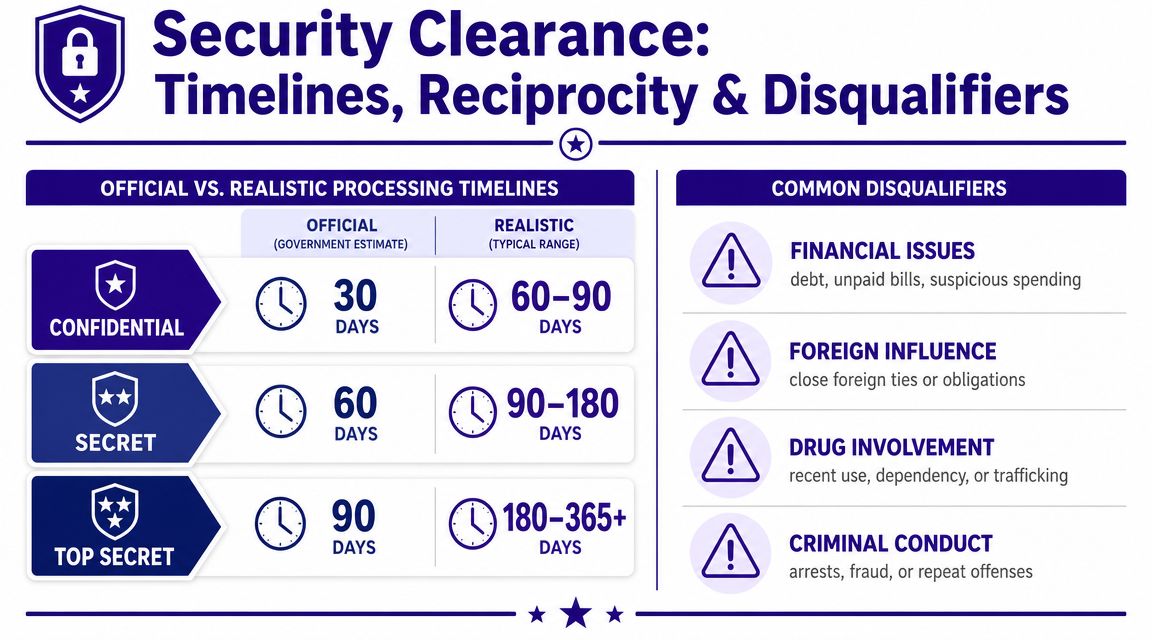
The published targets and actual case times can be far apart. Governmentwide targets cited for clearances are 40 days for Secret, 75 days for Top Secret, and 25 days for public trust positions, but real timelines can stretch. For DoD and industry cases, Secret processing averaged 94 days in FY 2023 Q3, 140 days in FY 2024 Q3, and 138 days in FY 2025 Q3 according to this security clearance timing and denial guide.
Why published targets and lived timelines differ
Targets are useful for policy. They are not hiring guarantees.
A straightforward case with complete information may move relatively cleanly. A case with missing records, disclosure inconsistencies, heavier workloads, or added role requirements may not. That’s why serious employers build staffing plans that assume movement, but don’t depend on best-case timing.
For candidates, the practical takeaway is simple. Don’t make personal decisions based on the fastest scenario. Keep communication open with the sponsor and ask what work, if any, can happen before full access is granted.
What reciprocity can and can’t do
A prior clearance can help, but it doesn’t erase agency-specific requirements. In practice, reciprocity means an organization may recognize prior vetting, yet role requirements, updated checks, or additional internal steps can still create delay.
That’s why recruiters should avoid telling candidates that a move will be “effortless” just because they already held a clearance. It may transfer efficiently. It may not. The safer message is that prior cleared history can be valuable, but it doesn’t remove the new employer’s obligations.
The issues that derail cases most often
The good news is that denial rates are relatively low. One source cites about 2% of applications denied annually. The more useful takeaway is where the trouble usually appears. The same source says financial issues are the leading reason for denial and account for nearly 30% of denials, with many cases also affected by debt, drug involvement, or false SF-86 disclosures.
That pattern matters because these are often preventable or at least explainable issues.
- Financial problems: Unmanaged debt, unresolved delinquencies, and avoidance of the issue tend to create more concern than a problem the candidate is actively addressing.
- Drug involvement: Recency, pattern, and candor all matter.
- False statements or omissions: Candidates often think an omission is safer than a damaging fact. In clearance review, that gamble often backfires.
- Conduct issues tied to service history: For veterans entering contractor roles, discharge-related matters may affect how past conduct is interpreted. A practical guide for service members on discharge upgrades can help readers understand one avenue for addressing that record when appropriate.
The most important lesson for both sides is that denials usually aren’t about trivia. They’re about trust, judgment, and whether the record looks complete.
Staying Cleared with Continuous Evaluation
Many people still talk about clearance as if the whole challenge is getting approved once. That view is outdated. The harder operational reality is maintaining eligibility over time.
One frequently missed point is that reinvestigations can be required as often as every five years for Top Secret clearances, and existing clearances can be reviewed at any time. The larger shift is toward continuous evaluation, which moves oversight from occasional review to near-real-time detection of risk signals in credit, criminal, and public records, as described in this security clearance maintenance FAQ.
Clearance is now a lifecycle status
For employees, that means clearance isn’t a trophy earned once and stored on a resume forever. It’s an ongoing status tied to reporting obligations, conduct, and consistency. Financial trouble, legal issues, foreign contacts, and other reportable matters don’t become important only when reinvestigation paperwork comes due. They may matter as they occur.
For employers, this changes management responsibility too. Security teams can’t assume cleared staff understand the reporting culture automatically. Technical talent often comes from commercial environments where privacy expectations are different and off-hours conduct is treated differently.
Getting cleared matters. Staying cleared protects the job, the program, and future mobility.
What employees and employers need to do differently
The strongest cleared environments usually do a few things well:
- Employees report early: Waiting to see whether an issue “goes away” can make a manageable problem look like concealment.
- Managers know when to escalate: Line managers don’t need to adjudicate. They do need to route concerns to the right security contact.
- Security messaging stays practical: People need examples of what must be reported, not abstract reminders.
- Legal trouble gets addressed quickly: Cases involving allegations can affect eligibility long before any final outcome. For readers dealing with that overlap, this discussion of criminal allegations and military clearance gives useful context on how serious accusations can trigger clearance consequences.
A clearance holder who understands this lifecycle has a better chance of protecting it. A company that understands it is less likely to lose hard-to-replace talent over avoidable reporting failures.
Practical Guidance for Employers and Candidates
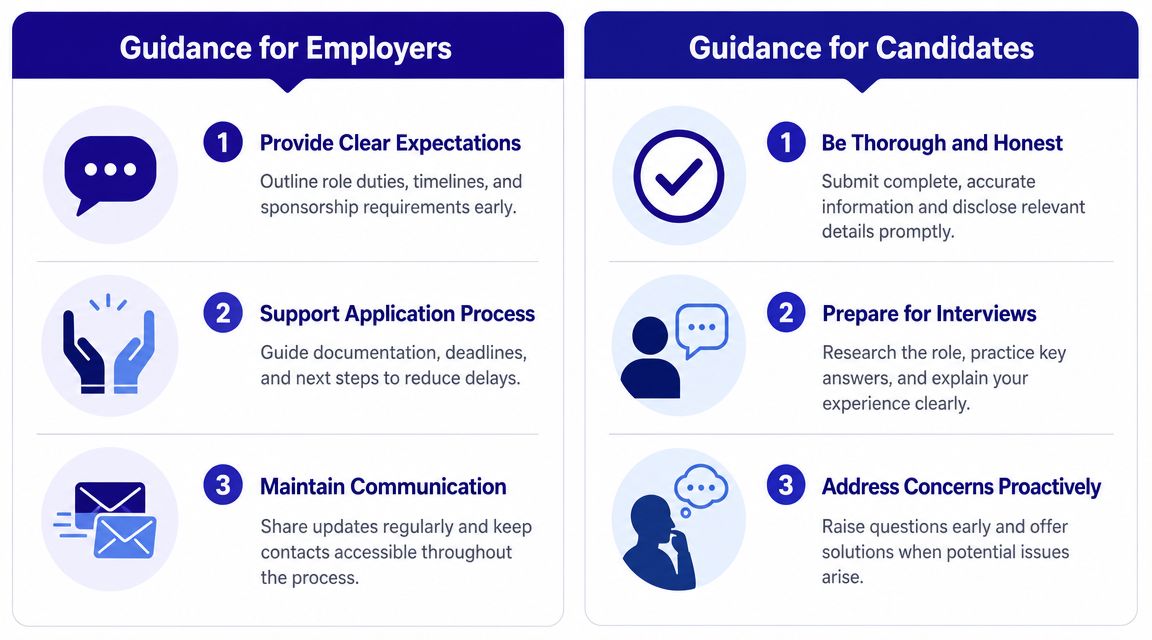
The best results in the security clearance process come from shared discipline. Employers control sponsorship, communication, and hiring design. Candidates control disclosure quality, preparation, and day-to-day decisions that affect trustworthiness. When either side treats the process casually, the other side pays for it.
What employers should do
Hiring teams need a playbook that reflects how cleared roles move.
- Set a realistic timeline: Don’t staff a mission-critical program as if every case will move quickly. Build project coverage that can survive delay.
- Screen for clearability, not just skill: Technical depth matters, but so do documentation habits, consistency, and willingness to discuss risk areas directly.
- Prepare candidates before submission: Candidates should know what the process will ask of them and where common mistakes occur.
- Create a communication cadence: Silence makes candidates anxious and increases drop-off risk.
- Coordinate recruiters and security staff: A recruiter should never promise what the security office can’t support.
- Use specialized hiring support where it fits: For organizations building teams in cyber and government IT, Nexus IT Group’s government cybersecurity hiring case study shows the kind of workflow issues that matter when sourcing for sensitive programs.
A hiring manager also needs to decide which roles call for already-cleared talent and which can support sponsorship. That one staffing choice often determines whether a req stays open too long.
What candidates should do
Candidates usually improve their odds when they act like investigators will verify everything, because they will verify a lot.
-
Start with full disclosure
If an issue exists, prepare the facts and supporting context. Don’t rely on memory alone. -
Make the SF-86 consistent with everything else
Resume dates, LinkedIn dates, interview statements, and form answers should align. -
Treat interviews seriously
If an investigator asks about debt, foreign travel, or a past conduct issue, answer directly and specifically. -
Fix what can be fixed
Financial organization, record gathering, and documentation of resolved issues are worth doing before questions arrive. -
Live like the clearance matters after hire
Cleared status can affect future promotions, role changes, and mobility. Habits count.
Candidates don’t need a perfect past. They need a complete, credible record and the judgment to handle scrutiny well.
Employers and candidates who understand their shared responsibilities usually move through the process with fewer surprises. That doesn’t make the system fast. It does make it more manageable.
When cleared hiring affects a critical role, a recruiting partner who understands both technical evaluation and security-related hiring constraints can reduce avoidable delays. nexus IT group works with employers and technology professionals on hard-to-fill IT roles, including cybersecurity and government-focused hiring, with support around role alignment, candidate preparation, and communication throughout the hiring process.