
Cloud DevOps engineer jobs are growing at a sustained 20% annual rate from 2020 through 2025, according to the Burning Glass Institute 2025 report summary provided in the verified data. That number changes the conversation. This isn’t a niche path for candidates who like tooling. It’s a hiring market built around companies that need faster deployment, cleaner automation, and engineers who can stop infrastructure from turning into chaos.
Most candidates still approach cloud DevOps engineer jobs the wrong way. They pile tools onto a resume, list a few certifications, and hope recruiters connect the dots. Hiring managers don’t hire tool collectors. They hire engineers who can automate delivery, stabilize systems, and explain the tradeoffs behind architectural decisions in plain English.
That difference is what gets interviews, better offers, and stronger long-term positioning.
Table of Contents
- Mastering the Modern Cloud DevOps Skill Stack
- Building Your High-Impact Project Portfolio
- Optimizing Your Resume and LinkedIn Profile
- Strategic Job Searching and Recruiter Partnerships
- Navigating the Multi-Stage DevOps Interview
- Decoding Salary Ranges and Negotiating Your Offer
- Charting Your Career Growth Beyond the First Role
Mastering the Modern Cloud DevOps Skill Stack
The strongest candidates don’t present a random stack. They present depth in the areas that hiring teams weigh most heavily.
A practical hiring matrix for cloud DevOps roles puts Infrastructure as Code at 40%, CI/CD pipeline orchestration at 30%, and container orchestration at 20%. That weighting comes from the verified hiring methodology data and matters because it mirrors how technical screens are usually judged. If a candidate is weak in Terraform or CloudFormation, no amount of buzzword padding will fix it.
What hiring teams actually prioritize
Start with IaC. Terraform and CloudFormation aren’t impressive because they’re popular. They matter because they show that an engineer can create repeatable environments, review infrastructure changes in version control, and reduce dependency on manual console work. A resume should never just say “used Terraform.” It should show what Terraform managed, how modules were structured, and what environments were supported.
Then comes CI/CD orchestration. Jenkins, GitHub Actions, GitLab CI, Azure DevOps, and similar tools all matter, but the key signal is ownership. Hiring managers want candidates who’ve built or reworked delivery pipelines, handled rollback logic, managed approvals, and integrated testing and security checks in a way that development teams can effectively use.
Containerization is where weaker candidates often get exposed. Kubernetes and Docker belong on almost every serious cloud DevOps resume, but shallow exposure is obvious. Teams want candidates who can explain scheduling, deployments, ingress, secrets handling, resource limits, and what broke in production.
Practical rule: If a candidate can’t explain a production incident involving Terraform state, a failing pipeline, or a Kubernetes deployment gone wrong, the skill probably isn’t deep enough.
A strong baseline for cloud DevOps engineer jobs usually includes:
- IaC depth: Terraform or CloudFormation, reusable modules, remote state strategy, environment promotion, and peer-reviewed infrastructure changes.
- Pipeline ownership: CI/CD design, artifact handling, deployment approvals, secrets management, and failure recovery.
- Container fluency: Docker image practices, Kubernetes workloads, debugging, and cluster-level operational awareness.
- Observability: Prometheus, Grafana, logs, alerts, and useful dashboards that help engineers act instead of stare.
For a sharper breakdown of what separates surface-level knowledge from in-depth understanding, this guide on what makes a good DevOps engineer is worth reviewing.
How platform experience translates
Cloud experience carries over, but not perfectly. Candidates should package platform knowledge in terms of concepts first and services second.
| Category | AWS (Amazon Web Services) | Azure (Microsoft) | GCP (Google Cloud Platform) |
|---|---|---|---|
| Compute and containers | EC2, ECS, EKS, Lambda | Virtual Machines, AKS, Functions | Compute Engine, GKE, Cloud Functions |
| Infrastructure as Code | CloudFormation, Terraform | ARM, Bicep, Terraform | Deployment Manager, Terraform |
| CI/CD and automation | CodePipeline, CodeBuild, GitHub Actions | Azure DevOps, GitHub Actions | Cloud Build, GitHub Actions |
| Observability | CloudWatch, Prometheus, Grafana | Azure Monitor, Log Analytics, Grafana | Cloud Monitoring, Cloud Logging, Grafana |
| Identity and access | IAM | Entra ID and Azure RBAC | IAM |
| Regulated environments | GovCloud, FedRAMP-aligned workstreams | Government and regulated Azure environments | Regulated GCP environments by project need |
The point isn’t to claim mastery across all three providers. That usually backfires. The point is to show transferable judgment. Someone who understands IAM boundaries, workload deployment, policy controls, and pipeline architecture on AWS can often ramp into Azure or GCP faster than a keyword scanner assumes.
Candidates targeting government, defense, or heavily regulated enterprise work need to be blunt about one thing. AWS GovCloud and FedRAMP proficiency are now listed as essential in 72% of enterprise contracts, based on the verified data requirement for top-tier roles. In those markets, “familiar with compliance” won’t carry any weight.
Building Your High-Impact Project Portfolio
Certifications open doors. Portfolios close the deal.
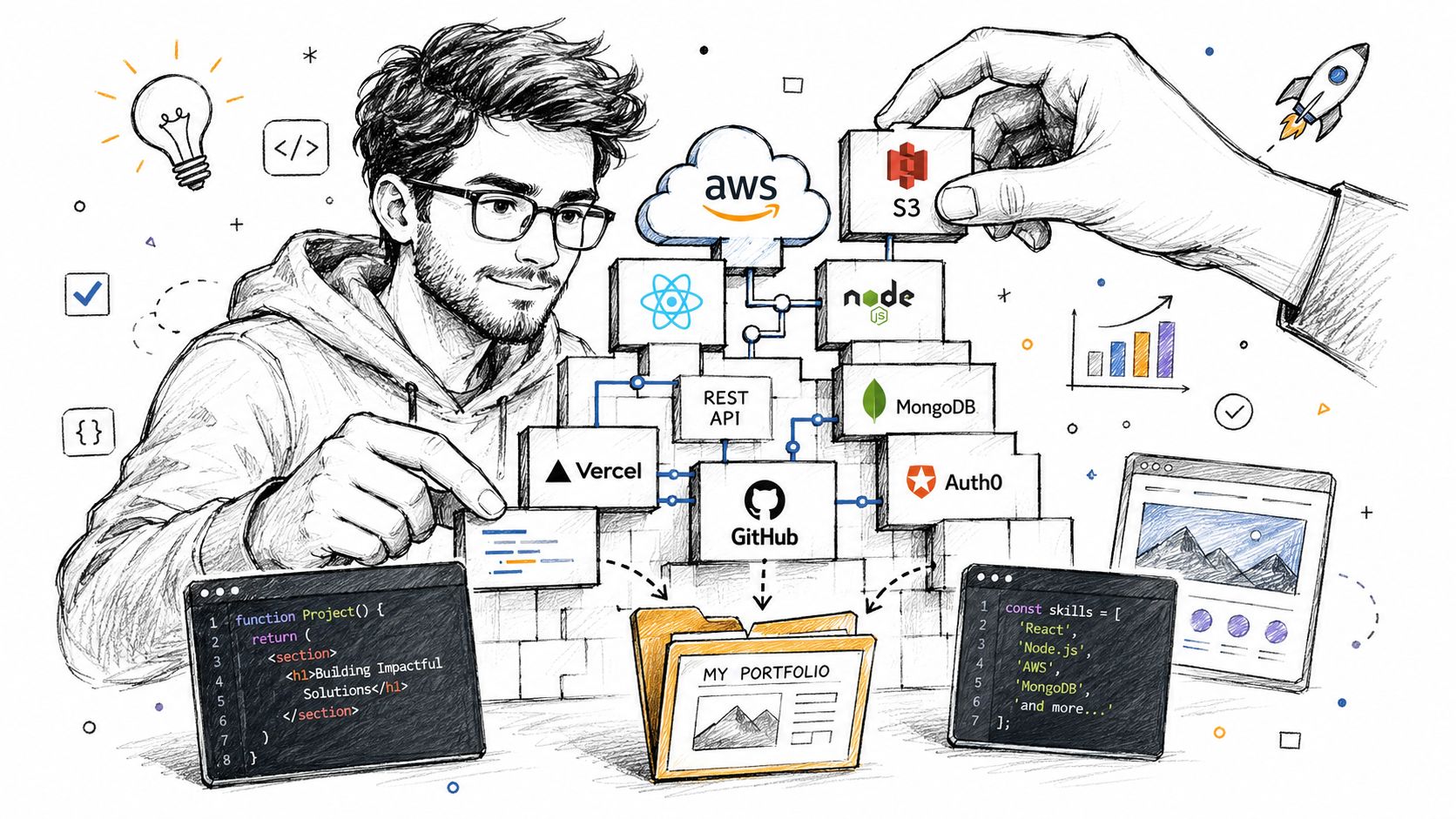
Hiring teams don’t remember another candidate who passed an exam. They remember the engineer who can walk through a deployment pipeline, explain why a monitoring threshold was tuned a certain way, and show a repository that looks like it was built for a real team instead of a tutorial.
Projects that prove real value
The most effective portfolio projects aren’t generic apps. They demonstrate operational judgment.
One strong project is a microservices deployment pipeline. A candidate can build a simple service set, containerize it with Docker, deploy it to Kubernetes, and wire in CI/CD so a code change triggers testing and deployment. That project proves more than coding ability. It shows workflow design, environment thinking, and release automation.
A second useful portfolio piece is an IaC-driven environment build. That can include provisioning cloud resources with Terraform or CloudFormation, separating environments cleanly, and documenting how changes move from development to production. Recruiters look for this because it tells them the candidate understands reproducibility, not just configuration.
A third option is an observability-focused project. A sample stack with Prometheus and Grafana, or equivalent monitoring and alerting tooling, shows that the candidate understands that shipping software is only half the job. Keeping it visible and diagnosable matters just as much.
A portfolio should answer one question fast. Can this person operate in production without creating cleanup work for everyone else?
How to present the work
A GitHub repo without context is wasted effort. The README needs to function like a mini case study.
Strong project documentation usually includes:
- Business scenario: What problem the project solves.
- Architecture summary: Services used, deployment pattern, and environment layout.
- Setup and deployment steps: Enough detail to prove the project is reproducible.
- Operational decisions: Logging, rollback, secret handling, monitoring, and failure points.
- Screenshots or diagrams: Clean visuals that let a reviewer understand the system quickly.
Candidates should also record tradeoffs. If the project uses managed services instead of self-hosted components, say why. If the Kubernetes setup avoids advanced cluster administration because the focus is application deployment, say that too. Hiring managers trust candidates who understand scope boundaries.
The best portfolio work doesn’t try to look massive. It looks deliberate, documented, and operationally sane.
Optimizing Your Resume and LinkedIn Profile
A resume is not a career diary. It’s a conversion document.
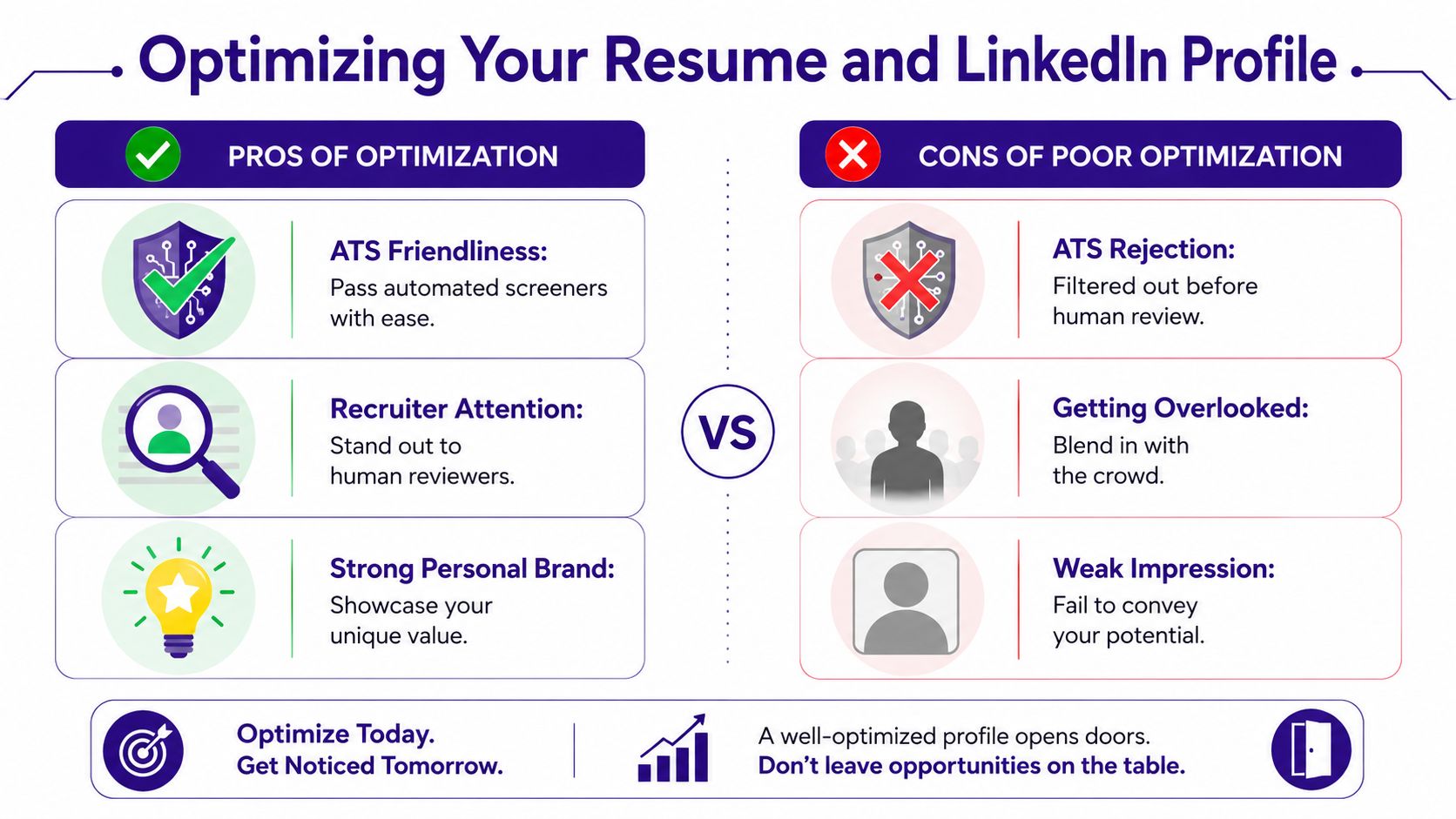
Most cloud DevOps resumes fail because they read like internal HR records. “Responsible for deployments.” “Worked with AWS.” “Supported CI/CD.” None of that helps a recruiter decide whether to move a candidate into a shortlist. Strong candidates frame work in terms of ownership, technical depth, and business impact.
Stop writing a job description
The fastest fix is to rewrite bullets using a simple achievement structure. The STAR method works well if it’s applied tightly. Situation and task should be implied. Action and result should be obvious.
Bad bullet:
- Worked on AWS infrastructure and deployment automation.
Better bullet:
- Built and maintained Terraform-based AWS infrastructure, standardized environment provisioning, and supported release automation across application teams.
Bad bullet:
- Managed Kubernetes deployments.
Better bullet:
- Managed Kubernetes application deployments, handled rollout issues, and improved deployment consistency through container and manifest standardization.
Those examples don’t force made-up metrics. That matters. A recruiter would rather see clear, credible ownership than fake precision.
What recruiters scan for in seconds
Recruiters usually scan a cloud DevOps resume for a few immediate signals:
- Cloud specificity: AWS, Azure, or GCP should be clear. Mixed claims without a primary platform often look inflated.
- Toolchain coherence: Terraform, Kubernetes, Docker, CI/CD tooling, and observability should appear as part of a working stack, not as isolated keywords.
- Production scope: Terms like deployment pipelines, incident response, infrastructure modules, monitoring, IAM, and environment management suggest real exposure.
- Seniority clues: Ownership language matters. “Supported” reads junior. “Built,” “designed,” “standardized,” and “led” read stronger when they’re true.
LinkedIn needs the same discipline. The headline shouldn’t just say “DevOps Engineer.” It should signal platform, depth, and specialization. A stronger version might reference AWS, Kubernetes, Terraform, CI/CD, or regulated cloud work if that’s part of the actual background.
A summary should also answer three questions quickly:
- What environments has the candidate worked in
- What systems has the candidate helped build or run
- What kind of role is the candidate targeting next
Recruiter reality: If LinkedIn and the resume tell different stories, the profile loses credibility immediately.
The “Skills” section matters less than candidates think, but it still helps when it reinforces the core stack. Endorsements won’t win interviews. Consistency will.
Candidates who want to signal availability without broadcasting it broadly should use platform features carefully, keep profile language current, and make sure recent project descriptions align with the roles they want now, not the roles they had three years ago.
Strategic Job Searching and Recruiter Partnerships
A Cloud/DevOps search usually goes sideways for one reason. The candidate applies broadly, presents themselves vaguely, and leaves recruiters and hiring managers to guess where they fit.
That approach wastes time.
The candidates who get traction fastest run a focused search. They pick a target lane, build a short list of companies, and make it easy for recruiters to match them to the right role. If your background is strongest in AWS platform work with Terraform, Kubernetes, and CI/CD ownership, say that clearly and keep saying it. Recruiters do not need a tour of every tool you have touched. They need a sharp marketable profile they can put in front of a manager with confidence.
Use multiple channels, but keep the message tight
Public job boards still matter. They are just the noisiest part of the market. Good Cloud/DevOps roles also show up through engineering communities, direct referrals, and recruiter outreach before a candidate ever sees a polished posting.
Use all three:
- Targeted communities: Cloud, SRE, platform engineering, Kubernetes, and DevOps groups often surface openings early.
- Industry events and technical meetups: These are useful because engineers talk openly about platform rebuilds, cloud migrations, and budgeted headcount.
- Referrals: A trusted intro from a former teammate, manager, or architect gets more attention than another cold application in a crowded queue.
Be selective with job descriptions. Sloppy postings usually signal sloppy hiring. If a company asks for deep AWS, Azure, and GCP experience, plus expert Kubernetes, platform engineering, security, and app delivery ownership in one mid-level role, the hiring team probably has not defined the job well. Recruiters notice this. Strong candidates should too.
Work with recruiters like a serious candidate
A recruiter can speed up your search only if you give them something usable. The best candidates do that immediately.
Send a clear brief on four points:
- Target role: Platform Engineer, DevOps Engineer, SRE, or cloud engineer with delivery ownership.
- Core stack: Primary cloud, infrastructure as code tool, container platform, CI/CD tooling, and scripting language.
- Constraints: Compensation floor, location, remote expectations, on-call tolerance, and clearance requirements.
- Context: Short tenures, contract-heavy history, title mismatches, or industry changes.
This is what recruiter partnership looks like. You give precise direction. The recruiter tests your profile against real openings, gives market feedback, and tells you where your story is strong or weak. If you want a practical breakdown of that process, read this guide on working effectively with a technical recruiter.
Vet recruiters with the same discipline. Ask what percentage of their work is Cloud/DevOps. Ask whether they recruit directly for hiring managers or through layered vendor chains. Ask how they distinguish between platform ownership, release engineering, SRE, and application support dressed up as DevOps. If they cannot answer cleanly, keep looking.
One factual example is nexus IT group, a firm that recruits across AWS, Azure, and GCP hiring. That matters if you want a recruiter who already understands cloud infrastructure hiring patterns, rather than a generalist recruiter reading from a keyword list.
Navigating the Multi-Stage DevOps Interview
DevOps interviews fail when candidates answer only the literal question. Interviewers are usually testing judgment, not memory.
A candidate might get asked about Terraform, but the underlying question is whether that person understands safe change management. A troubleshooting prompt about Kubernetes might really be about prioritization under pressure. Strong candidates treat every round as an opportunity to show decision-making.
What each interview round is testing
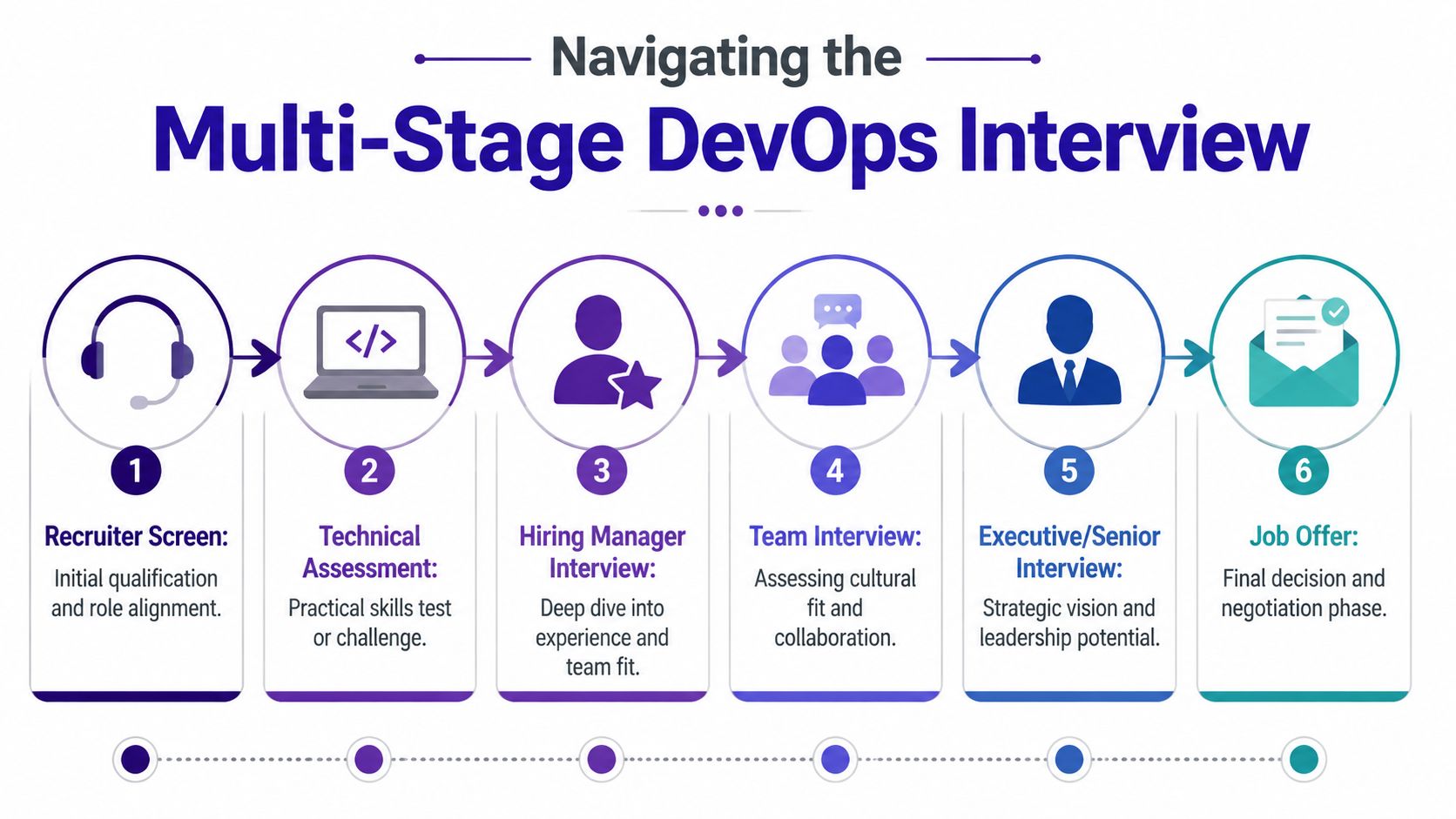
The recruiter screen is usually about fit, communication, and obvious mismatches. Candidates should explain current scope clearly, identify their primary cloud and tooling, and state what kind of team they want next. Rambling hurts more than people think.
The technical assessment often tests practical depth. That may include CI/CD design, infrastructure patterns, scripting, Kubernetes troubleshooting, or cloud architecture basics. Candidates who narrate their thinking usually perform better than candidates who jump straight to a shaky answer.
The hiring manager round is where ownership gets tested. Managers want to hear what the candidate drove, what broke, how incidents were handled, and what tradeoffs were made when speed and reliability pulled in opposite directions.
The team interview is less about whether the candidate is “nice” and more about whether they can work cross-functionally. DevOps engineers spend a lot of time translating between developers, security, infrastructure, and leadership. Candidates who speak only in tools often stall here.
The strongest interview answer usually includes context, constraints, action, and the consequence of the decision.
For top-tier regulated roles, candidates also need to be ready for security and compliance questions. AWS GovCloud and FedRAMP proficiency are mandatory in 72% of enterprise contracts tied to these roles, according to the verified data requirement for this topic. That means a vague answer about “security best practices” won’t be enough when the team hires against compliance-sensitive environments.
How to handle system design and live exercises
System design interviews create problems for candidates because the prompt is often intentionally broad. The fix is structure.
A practical response framework looks like this:
- Clarify requirements first: Is the system internal or customer-facing. Is availability, latency, or auditability the main priority.
- Define constraints: Team size, expected traffic pattern, compliance requirements, cost sensitivity, and operational complexity.
- Lay out components: Ingress, compute, storage, messaging, logging, secrets, observability, and deployment path.
- Discuss tradeoffs: Managed services versus self-managed components, speed versus control, and simplicity versus flexibility.
- Address failure modes: Rollbacks, incident visibility, alerting, state handling, and access controls.
For a logging or deployment-system prompt, candidates should think like operators. Show how systems are observed, how failures are surfaced, and how engineers recover when things go wrong.
Live scripting or coding rounds work the same way. A perfect solution isn’t always the point. Interviewers want to see how the candidate decomposes a problem, names assumptions, and stays calm while working through unknowns.
Candidates should also prepare a few incident stories in advance. Good examples include a failed deployment, a broken pipeline, a permissions issue, or a noisy alerting setup that had to be cleaned up. Those stories often carry more weight than abstract technical trivia because they reveal maturity under pressure.
Decoding Salary Ranges and Negotiating Your Offer
Candidates lose money when they negotiate without context. The cloud DevOps market rewards specialization, but compensation also shifts based on company type, funding model, and how critical the role is to delivery.
The broad market baseline is already strong. The average annual salary for a Cloud DevOps engineer in the United States is $133,115 as of 2025, with senior professionals earning between $150,000 and $180,000 or more, and professionals with specialized cloud skills earning 30 to 50% higher than counterparts without those skills, based on the verified data set for this topic.
What the market is paying
Salary conversations should start with level and specialization, not title alone.
- Entry-level range: Verified data places entry-level professionals in the $80,000 to $100,000 range in the U.S.
- Mid-level range: Verified data places mid-level engineers in the $110,000 to $140,000 range.
- Senior range: Verified data places senior professionals in the $150,000 to $180,000 or more range.
Those ranges don’t tell the full story. Compensation also changes by employer model. Verified data shows 30 to 50% wage gaps across funding structures. Government and defense cloud roles often pay higher base compensation and carry less volatility. Venture-backed startups may offer equity but lower base pay, and candidates often overestimate what that equity is really worth.
That’s why total compensation review matters. Base salary, bonus structure, equity terms, remote flexibility, and long-term stability all belong in the same analysis. Teams that think carefully about recruitment and retention strategies usually package offers more intelligently, and candidates should evaluate those signals because they affect day-to-day quality of work as much as headline pay.
A more role-specific market breakdown appears in this guide to DevOps engineer salary.
How to negotiate without weakening your position
The best answer to “What are your salary expectations?” is usually a range tied to scope. A candidate should anchor around role level, cloud specialization, and any compliance or platform ownership depth that increases value.
A practical negotiation sequence looks like this:
- Confirm scope first: Don’t negotiate too early. Make sure the role’s actual responsibilities match the title.
- State a defensible range: Keep it aligned with market level and specialization.
- Ask what’s included: Bonus, equity, sign-on, on-call expectations, and remote policy all affect the overall compensation.
- Negotiate after the offer, not before interest is clear: The candidate is in a better negotiating position once the company decides it wants to hire.
- Get specifics in writing: Especially around equity, variable compensation, and flexibility.
Candidates shouldn’t apologize for negotiating. They should be prepared.
Charting Your Career Growth Beyond the First Role
Landing the first solid role matters. Staying static doesn’t.
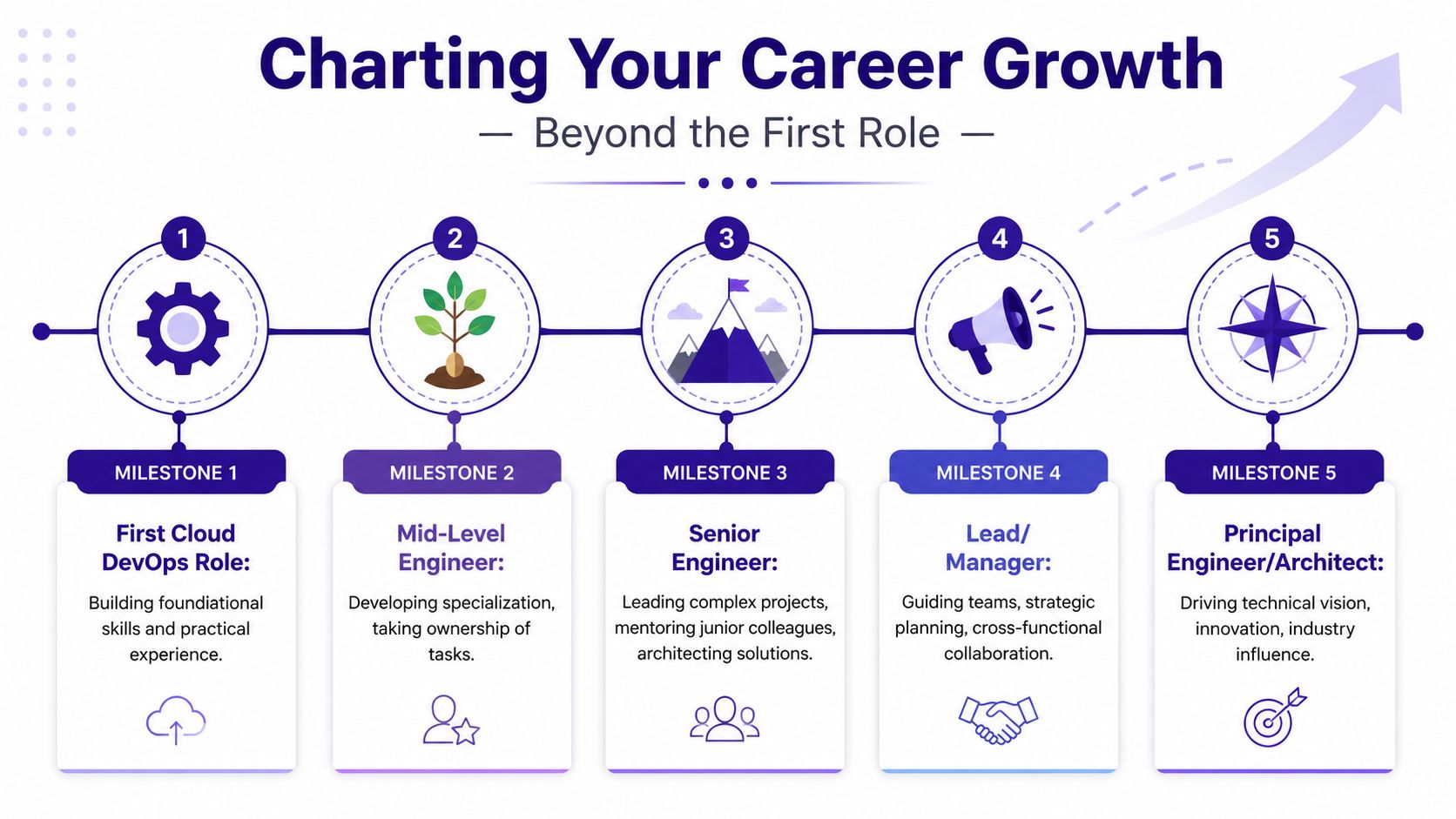
Cloud DevOps careers compound when engineers build adjacent depth instead of repeating the same deployment work for years. The market keeps rewarding people who can move from execution into architecture, security, reliability, and workflow automation.
Specializations that compound career value
Several paths consistently create stronger career advantages:
- DevSecOps: Good fit for engineers who want to embed policy, identity, secrets management, and compliance into delivery workflows.
- SRE: Strong path for engineers drawn to reliability, incident management, observability, and service performance.
- FinOps: Useful for engineers who understand cloud architecture and want to connect platform decisions to cloud cost control.
- MLOps: Increasingly relevant for teams supporting model deployment, workflow automation, and ML-adjacent infrastructure.
None of these paths replace core DevOps fundamentals. They build on them.
Why AI skills now matter in DevOps hiring
The sharpest career shift in the market is the move toward AI-assisted operations. According to the March 2025 McKinsey study cited in the verified data, 74% of enterprises now require cloud DevOps engineers to demonstrate proficiency in AI-assisted infrastructure orchestration, yet 89% of job postings still omit that requirement. That gap matters because candidates who only prepare for traditional pipeline work may be underselling themselves or missing where hiring is moving.
Candidates who learn to work with AI-assisted orchestration, automated policy generation, and predictive operational workflows won’t replace DevOps fundamentals. They’ll make those fundamentals more valuable.
The practical move is simple. Keep building core cloud, IaC, Kubernetes, and pipeline depth, then add AI-assisted workflow capability on top. That combination travels well across industries and gives engineers a stronger position when the next role demands more than standard automation.
Candidates exploring cloud DevOps engineer jobs don’t need more generic advice. They need role alignment, resume positioning, interview prep, and access to teams that know the difference between keyword matching and real platform depth. nexus IT group works in that lane, helping technology professionals and hiring teams connect around hard-to-fill cloud, DevOps, and related engineering roles.