
IT Director jobs sit at the center of one of the strongest leadership markets in technology, with projected double-digit growth and tens of thousands of openings each year in the broader management category that includes these roles.
That demand reflects a real shift in how companies use technology. Businesses no longer treat IT as a background support function. The IT Director is often the person translating cloud investment into operating efficiency, cybersecurity controls into reduced business risk, and AI adoption into systems that teams can use.
I see the same tension from both sides of the search. Candidates often view the role as the next step after managing infrastructure, service delivery, or enterprise systems. Employers need something narrower and harder to find. They want a leader who can run day-to-day operations, make sound architectural calls, and communicate with executives in terms of cost, risk, and execution.
The gap gets wider in high-demand specialties. A company hiring for an IT Director with cloud modernization experience is not hiring the same profile as a company trying to tighten cybersecurity governance or build practical AI oversight into its environment. One recent IT Director search for a municipal library district in Colorado is a good example. The title was familiar. The actual hiring criteria were tied to public-sector constraints, stakeholder management, and the ability to improve technology operations without overbuilding the team.
For candidates, the takeaway is clear. Technical depth helps get you considered, but directors get hired for judgment, prioritization, and business alignment. For employers, the cost of a vague brief is high. If the role is not defined around outcomes, the hiring process usually favors the most polished resume instead of the right leader.
Table of Contents
- The Strategic Importance of the IT Director Role
- What an IT Director Really Does in 2026
- Core Skills and Experience for Modern IT Directors
- IT Director Job Market Trends and Salary Insights
- For Candidates How to Land Your Next Director Role
- For Employers How to Hire the Right IT Leader
- Partnering for Success in IT Leadership
The Strategic Importance of the IT Director Role
The modern IT Director is where operational reality meets executive expectation. That matters because most businesses no longer treat technology as a support function that works in the background. Infrastructure, cybersecurity, SaaS sprawl, vendor dependency, identity controls, and business application performance now shape daily execution.
Candidates often view IT director jobs as a bigger team, a larger budget, and a broader title. Employers often frame the same role as “someone who can own IT.” Both views are incomplete. The job is to convert technical complexity into controlled business outcomes.
An effective IT Director doesn’t just keep systems running. That leader decides which risks are tolerable, which platforms need standardization, when to escalate spend, and how to explain trade-offs to finance, operations, legal, and the executive team.
Practical rule: If the role touches security, uptime, cloud cost, enterprise applications, and vendor accountability, it isn’t a back-office manager job. It’s a business control role.
That distinction is why these searches fail when companies hire for familiarity instead of scope. A candidate who has only supervised help desk and endpoint support may struggle in a role that requires cloud governance, identity strategy, and board-facing incident communication. A company that writes a maintenance-focused job description may miss the candidates who can modernize the environment.
Public-sector and operationally complex environments make this especially clear. A technology leader in a distributed, service-heavy organization has to balance uptime, procurement constraints, stakeholder communication, and long-term modernization at once. That kind of scope is reflected in searches like this IT Director placement for a municipal library district in Colorado, where the title carries operational and institutional weight far beyond routine IT supervision.
Why the role has become harder to fill
Three factors keep raising the bar:
- Broader enterprise footprint: Directors are expected to understand both core infrastructure and business systems.
- Higher risk ownership: Security, continuity, compliance, and vendor resilience now sit close to the role.
- Executive translation: Technical credibility alone isn’t enough. The role requires policy judgment and business communication.
What an IT Director Really Does in 2026
The outdated version of the role is easy to spot. It treats the IT Director as the person who runs servers, manages tickets, and oversees the network team. That version still appears in some organizations, but it no longer reflects the true center of gravity for most IT director jobs.
According to Indeed’s hiring guide, an IT Director role is typically enterprise-operational, not purely managerial, with scope across infrastructure, networking, software, security, vendor oversight, disaster recovery, and business continuity (Indeed IT Director job description guide). That breadth changes how the role should be hired for and how candidates should position themselves.
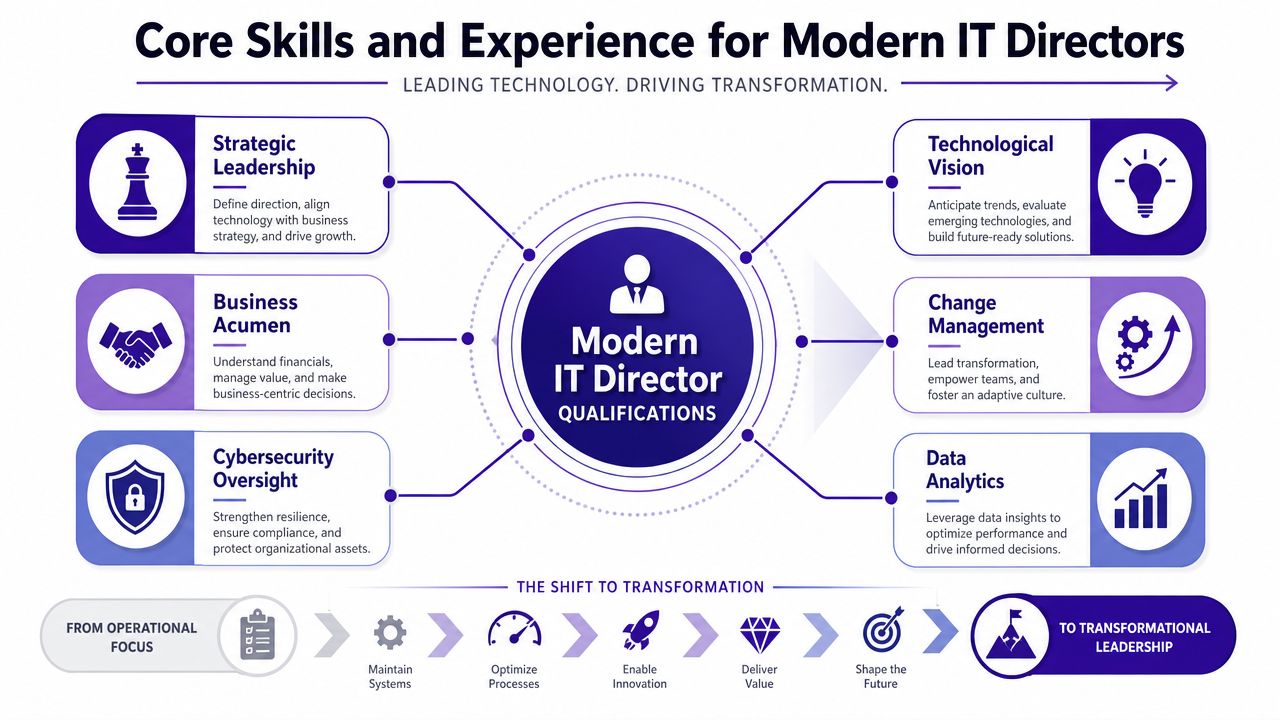
The operating mandate
An IT Director usually owns a portfolio, not a single function. In practice, that often includes:
- Infrastructure stewardship: Data center or cloud environment oversight, endpoint standards, network reliability, and core systems performance.
- Security coordination: Vulnerability response, access controls, patching discipline, and alignment with organizational security requirements.
- Vendor management: Contract review, escalation management, service accountability, and renewal strategy.
- Resilience planning: Disaster recovery planning, business continuity processes, backup discipline, and incident response coordination.
- Policy translation: Turning technical findings into operating standards leaders outside IT can understand and support.
What separates a director from a manager isn’t only scale. It’s the need to make cross-domain decisions under imperfect information. If a major SaaS platform is underperforming, a director may need to balance user disruption, vendor pressure, migration cost, security implications, and executive visibility in a single decision cycle.
What works and what doesn’t
The strongest directors don’t lead with tools. They lead with operating models. They know where ownership sits, how incidents escalate, which vendors need tighter governance, and where technical debt creates business exposure.
What doesn’t work is narrow specialization presented as enterprise leadership. A candidate may be excellent in networking or cloud architecture and still miss the role if that experience doesn’t connect to governance, budget ownership, or stakeholder management.
The title says director. The job often behaves more like a translator, operator, negotiator, and risk owner at the same time.
For hiring teams, many searches often drift off target. The company asks for a strategic leader, but interviews only test technical depth. Or the company says it needs transformation, but the role is scoped as a reactive infrastructure position with no authority to change vendors, process, or platform standards.
The practical takeaway for both sides
Candidates should frame their experience around systems reliability, security posture, continuity planning, and executive communication. Employers should define where the role has real authority. If that authority isn’t clear, the hire won’t be either.
Core Skills and Experience for Modern IT Directors
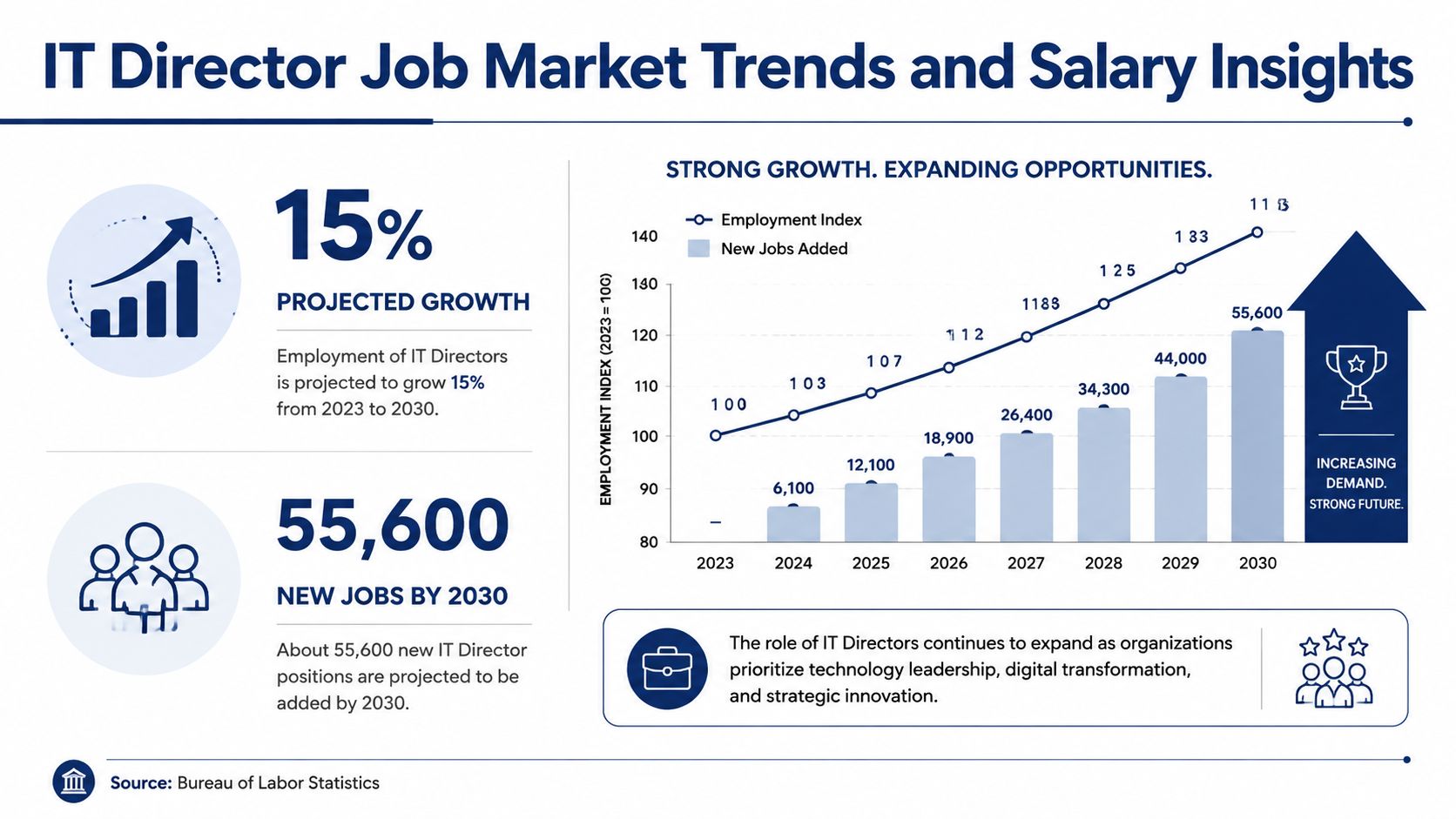
The market has shifted from maintenance leadership to transformation leadership. Job description benchmarks suggest employers often want 10+ years of IT experience with at least 5 years in leadership, and commonly cite capabilities such as ITIL, PMP, CISSP, IT governance, enterprise architecture, disaster recovery, and information security (Digital Waffle IT Director job description guide).
That requirement profile tells candidates what to build and tells employers what to test. The role now demands range. Not random breadth, but connected breadth that supports execution.
Technical depth that maps to business risk
Strong candidates usually bring credibility in several of these areas:
| Capability area | What employers are really looking for |
|---|---|
| Cloud | Platform judgment, migration trade-offs, operational governance |
| Cybersecurity | Control awareness, incident readiness, access discipline |
| AI and automation | Practical use cases, governance, workflow improvement |
| Enterprise systems | Understanding of ERP, CRM, identity, integration, and data flow |
| Service operations | Reliability, escalation design, support maturity, vendor control |
Cloud, AI, and cybersecurity stand out because each one touches cost, risk, and speed. A director doesn’t need to be the deepest engineer in every stack. That person does need to know enough to challenge assumptions, identify weak plans, and sequence investment intelligently.
Leadership signals that actually matter
A title history alone doesn’t prove readiness. Hiring managers should look for evidence of:
- Cross-functional influence: Can the candidate align finance, operations, HR, and security around the same roadmap?
- Decision quality under pressure: Has the candidate handled incidents, outages, escalations, or politically sensitive platform choices?
- Team design: Has the candidate built structure, clarified ownership, and raised accountability?
- Change management: Can the candidate move a team from legacy habits to stronger standards without creating organizational revolt?
Certifications help when they support a broader story. ITIL can signal service management discipline. PMP can show delivery structure. CISSP often signals security fluency. None of them substitutes for judgment.
Hiring lens: The strongest profiles don’t read like a certification list. They read like someone who has owned difficult trade-offs across people, platforms, and risk.
Business and financial fluency
Many technically strong candidates often lose momentum during director-level interviews. These discussions often turn on budget logic, vendor management, and prioritization. Leaders who can explain why a modernization effort matters to cost control, resilience, or audit readiness usually stand out fast.
For candidates, the upgrade path is straightforward. Learn to speak in operating terms. For employers, the screening question is simple. Can this person connect technical work to business decisions without drifting into jargon?
IT Director Job Market Trends and Salary Insights
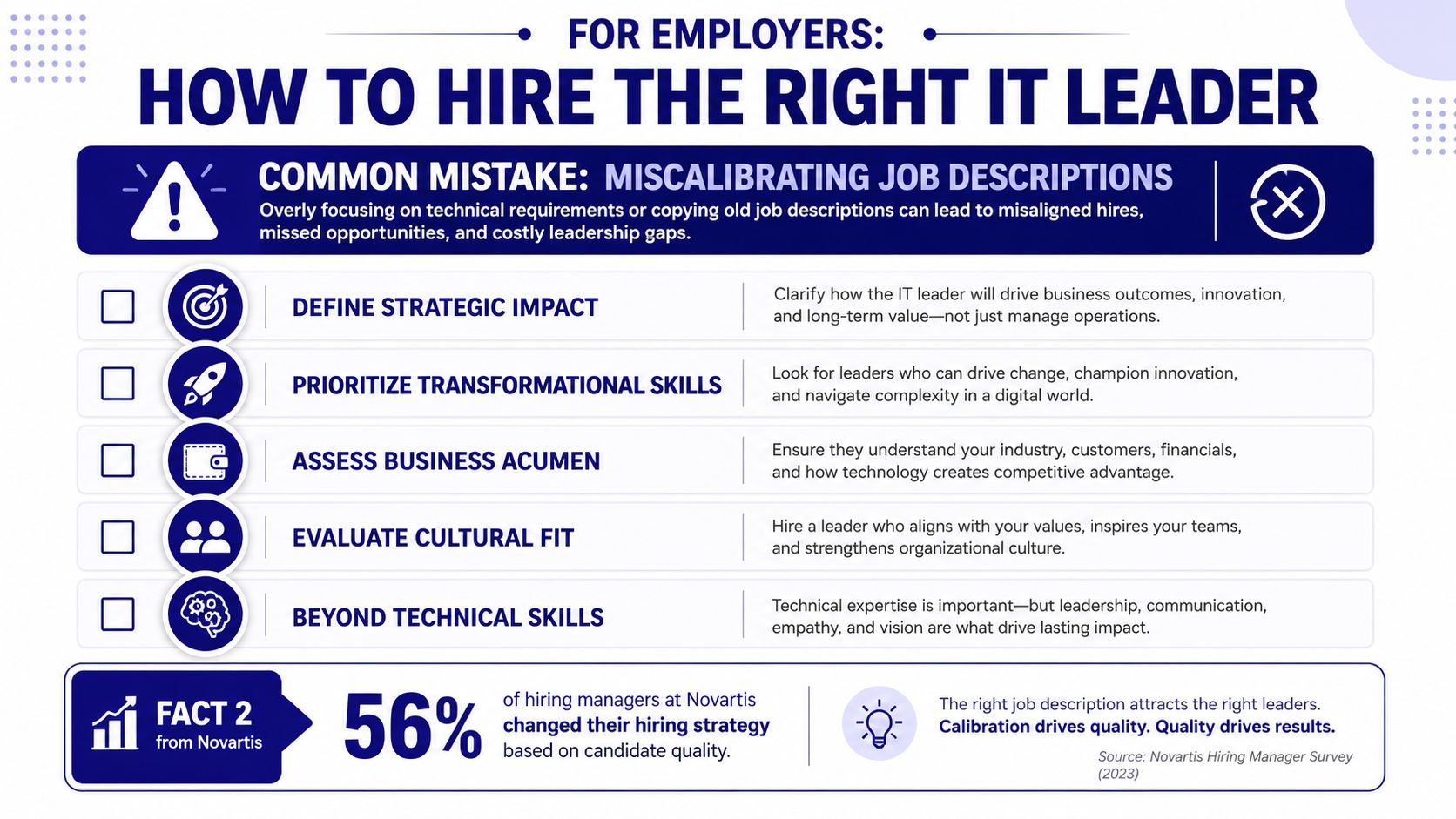
The market for IT director jobs is still active, but the title now covers a wider spread of responsibility than many compensation ranges admit. As noted earlier, federal labor data for computer and information systems managers points to continued growth, steady annual openings, and pay that sits well above the average management role. That is useful context, not a pricing sheet.
For both sides of the hiring table, the primary question is scope.
A director who owns service delivery for a single site should not be priced the same way as a director expected to lead cloud migration, tighten cybersecurity controls, manage AI adoption risk, and rationalize ERP or identity platforms across a multi-state business. The title may match. The business exposure does not.
What candidates should take from the market
Candidates often make one of two errors. They either anchor too low because they still see themselves as operations leaders, or they anchor too high based on title alone.
Compensation usually moves on five factors:
- Business scope: Infrastructure-only roles pay differently from roles that also own enterprise applications, data platforms, or digital transformation.
- Risk exposure: Cybersecurity oversight, audit pressure, and incident accountability raise the bar.
- Change mandate: Companies pay more for leaders expected to modernize cloud architecture, stabilize after turnover, or clean up technical debt.
- Industry pressure: Healthcare, financial services, defense, and other regulated environments often demand a broader control mindset.
- Reporting level: Direct exposure to the CIO, CTO, CFO, CEO, or board changes both expectations and package structure.
Candidates targeting modern director roles should also price specialized demand correctly. Cloud fluency, security credibility, and practical judgment around AI tools are increasingly part of director searches, especially when employers need someone who can balance speed with governance. For a more role-specific benchmark, this IT Director salary guide from Nexus IT Group breaks down compensation by scope rather than title alone.
What employers should take from the market
Employers lose strong director candidates when the job is framed too narrowly in the posting and too broadly in the interview process. I see this often. A company starts with “own infrastructure and support,” then reveals expectations around vendor consolidation, security remediation, board reporting, cloud cost control, and AI policy after the first call. That usually creates salary friction and credibility problems.
A better approach is to define the role by operating reality.
| Hiring question | Why it matters |
|---|---|
| Does this role maintain current operations or lead a major change agenda? | Transformation scope changes both compensation and candidate fit |
| Who owns cybersecurity risk, compliance coordination, and incident response? | Shared or direct risk ownership affects the level of leader required |
| Does the role cover business systems such as ERP, CRM, HRIS, or identity? | Broader platform ownership adds cross-functional complexity |
| How visible is the role to the executive team or board? | Executive communication skill narrows the candidate pool |
| Is AI adoption part of the brief, or is the priority governance and restraint? | The answer changes the profile from builder to risk-aware operator |
Strong hiring in this market starts with accuracy. Candidates want to know what they are walking into. Employers need to know what kind of leader they are trying to buy.
For Candidates How to Land Your Next Director Role
Many candidates pursuing IT director jobs still market themselves as senior technical managers. That’s usually the first problem. The second is failing to read the full scope of the role from the posting.
Recent job postings show the role increasingly spans ERP, HRIS, CRM, identity management, and systems integration, not just networks and servers. One cited Head of IT posting in California included global IT operations, ERP/HRIS/CRM oversight, and application architecture, which shows how easily infrastructure-only candidates can get screened out when they don’t present broader business systems expertise (Indeed IT Director and related postings reference).
Read the role before rewriting the resume
Two IT Director postings can use similar language and still describe very different jobs. One may be operations-heavy and driven by service reliability. Another may revolve around enterprise applications, integration, and cross-functional transformation.
Candidates should look for clues in the posting:
- Application language: Mentions of ERP, CRM, HRIS, or systems integration signal business systems leadership.
- Security language: References to controls, vulnerabilities, policy adherence, or audits point to governance-heavy scope.
- Transformation language: Cloud migration, automation, consolidation, or modernization suggest a change mandate.
- Operational language: Uptime, service desk, production support, endpoint management, and vendor escalation often indicate a steadier-state operating remit.
A resume should reflect that distinction. A networking-heavy resume sent to a business-systems-heavy role usually misses, even if the candidate is broadly capable.
What to show on the resume and LinkedIn profile
The strongest director-level profiles usually make five things obvious fast:
- Scope: Team size, functional coverage, platforms, and business units supported.
- Ownership: Budget, vendor management, security responsibilities, and executive reporting line.
- Change leadership: Migrations, consolidations, policy improvements, or operating model redesign.
- Business systems fluency: ERP, CRM, identity, service management, or integration responsibilities where relevant.
- Communication range: Work with finance, legal, compliance, operations, or senior leadership.
A good director resume doesn’t read like a task list. It reads like a record of ownership.
Candidates who need outside market feedback before entering a search often benefit from structured recruiter input. This guide on how to work with a recruiter during a technology job search is useful when deciding how to position scope, compensation expectations, and target roles.
How to handle the interview process
Director interviews often split into three tests. Technical credibility. Leadership maturity. Business judgment.
A practical prep approach looks like this:
- For technical panels: Be ready to discuss incident handling, cloud choices, security trade-offs, vendor escalations, and operational priorities.
- For executive interviews: Speak plainly about budget, risk, prioritization, and organizational friction.
- For final rounds: Prepare a point of view on the first ninety days. Not a grand strategy deck. A realistic operating assessment.
Weak candidates answer only what happened. Strong candidates explain why they made the call, what trade-off they accepted, and what they would tighten now.
For Employers How to Hire the Right IT Leader
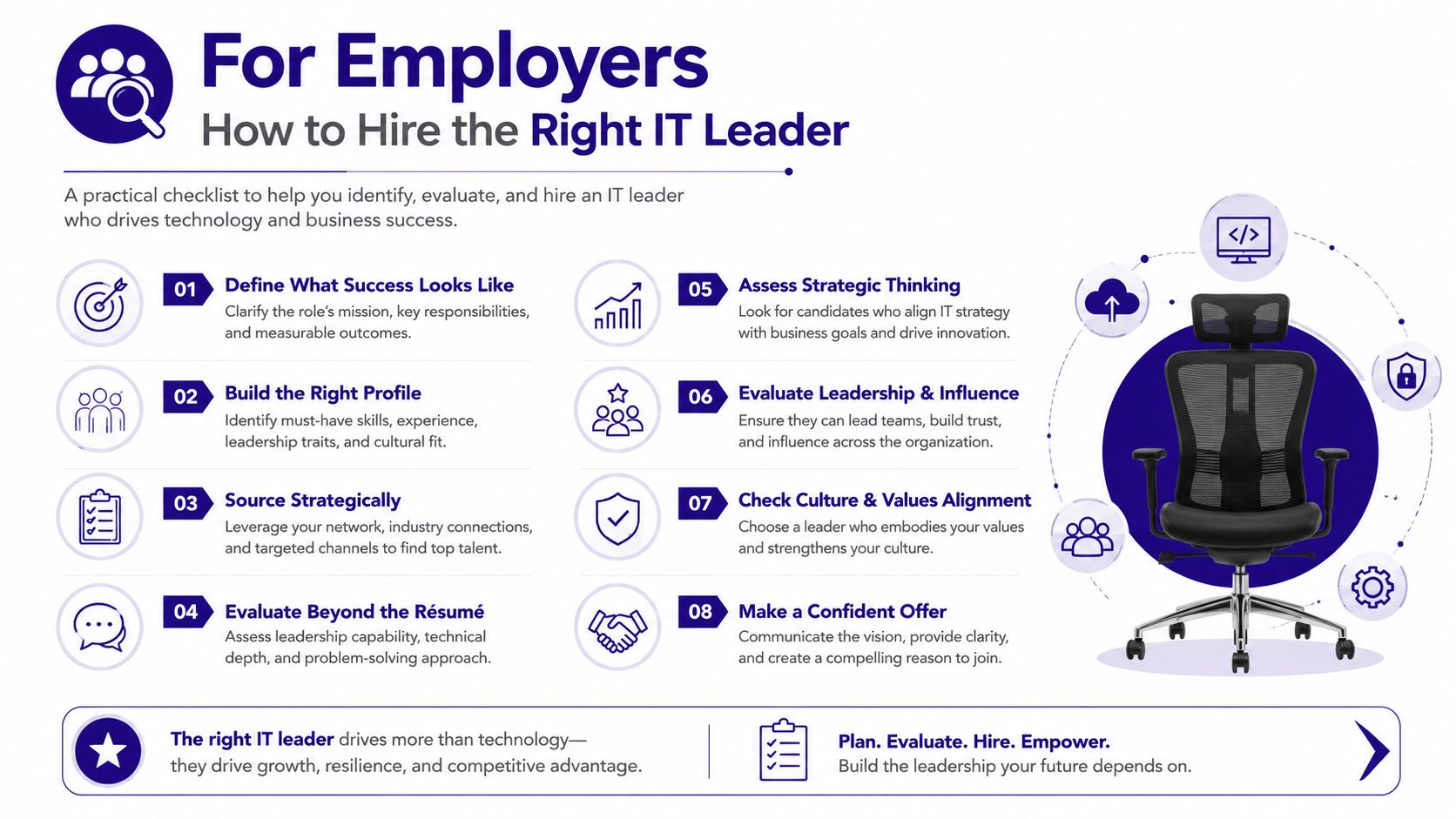
The most common hiring error isn’t compensation. It’s role calibration. Companies often ask for a strategic IT leader, then write a job description that mixes hands-on administration, vague transformation language, and unrealistic experience requirements into one impossible package.
Director-level benchmarks show why that fails. Novartis lists an Associate Director role requiring 6+ years in a programming or statistical role, 3+ years in line-management or equivalent leadership, and a salary range of $145,600 to $270,400 per year. AbbVie asks for an MS plus 10+ years of experience or a PhD plus 6+ years in statistics or biostatistics. Those examples show that director-level employers are buying deep domain experience plus leadership range, not just a title upgrade (Novartis Associate Director benchmark role).
Build the job around outcomes, not task sprawl
A good IT Director job description should answer four questions clearly:
- What must this person stabilize? Examples include service quality, security controls, infrastructure reliability, or vendor performance.
- What must this person change? Cloud modernization, systems integration, operating model redesign, or governance maturity.
- What will this person own? Team structure, budget, contracts, roadmap, incidents, or business applications.
- Who must this person influence? CIO, CTO, CFO, HR, legal, operations leaders, or external partners.
The worst descriptions read like an inventory of every problem the company has postponed. Strong candidates can spot that immediately.
Interview for judgment under real constraints
Behavioral questions work best when they force the candidate to reveal prioritization logic. Not polished language. Real judgment.
| Question Category | Sample Question |
|---|---|
| Incident leadership | Describe a major service disruption you led through. How did you structure communication, decisions, and recovery? |
| Cybersecurity oversight | Tell the panel about a time you had to push for a security control that other stakeholders resisted. What happened? |
| Cloud strategy | Walk through a cloud or platform decision where the technically elegant answer wasn’t the right business answer. |
| AI governance | How would you evaluate whether an AI initiative belongs in production, pilot, or the parking lot? |
| Vendor management | Give an example of a struggling vendor relationship you had to reset, renegotiate, or replace. |
| Executive communication | Explain a technical risk to a CFO or CEO audience without using technical shorthand. |
| Team leadership | What changes have you made to team design, accountability, or management layers that improved execution? |
| Enterprise systems | Describe a time business applications and infrastructure decisions collided. How did you resolve ownership and sequencing? |
Employers should test for decision quality in messy environments. That’s where director-level value shows up.
What a disciplined search process looks like
A practical process usually includes calibrated intake, targeted sourcing, scenario-based interviews, and compensation alignment before final rounds. When a company needs support in niche leadership markets such as cloud, cybersecurity, AI, or broader IT leadership, Nexus IT Group is one recruiting option that provides executive search and IT staffing services in those areas.
The key is consistency. If the company wants a transformation-oriented leader, every stage of the process should test transformation capability.
Partnering for Success in IT Leadership
The companies that hire well for IT director jobs understand one point early. This role isn’t a bigger version of IT management. It’s a leadership seat that connects systems, security, continuity, vendors, business applications, and executive priorities.
Candidates who win these roles usually present more than tenure. They show range, judgment, and operating credibility. They know when to talk architecture, when to talk policy, and when to talk cost, risk, or business friction. They also understand that cloud, AI, and cybersecurity aren’t separate specialties anymore. At the director level, those issues overlap.
Employers who hire well usually do three things better than the rest. They thoroughly define the job. They test for enterprise judgment, not just technical fluency. They align compensation and authority with the substantive work.
That gap between candidate aspiration and employer expectation is where many searches stall. It’s also where a specialized recruiting process creates value. The role has become too broad, too expensive, and too consequential for generic hiring habits.
Organizations building technology leadership teams and candidates targeting their next IT leadership move can explore current openings, hiring support, and search guidance through nexus IT group.